

Isn't this the same as RPA or Zapier?
No. Those tools repeat fixed steps and break when something changes. The AI Brain checks your data, interprets documents and chooses between options: what until now needed a person's judgement.

Enterprise
AI Brain
AI workflow automation
A conversational tool that lets you work with a team of AI agents, each specialised in one area of your company. They know your data, explain why things happen and carry out what you decide. We call it the Enterprise AI Brain.
You ask it in plain language, the way you would ask an analyst. Who your best customers are, why one of them lost margin in August, what stock has been sitting still in the warehouse. It does not hand you a chart and leave the work to you: it tells you there was a duplicated cost and a discount above the usual level, and where it found both.
Every company has its own. One understands sales, another finance, another operations, and all of them know your data model, your vocabulary and your rules. And then they act: they email the report, schedule the close for the 1st of the month, or watch a figure and alert you when it moves out of range.
What sets it apart from RPA or an ‘if this happens, do that’ workflow is that it reasons with context. It understands a supplier's email, checks the history and chooses between alternatives. Every answer and every action is logged with its reason, and anyone on the team can review or reverse it.
The three that come up before anyone talks budget.
No. Those tools repeat fixed steps and break when something changes. The AI Brain checks your data, interprets documents and chooses between options: what until now needed a person's judgement.
Yes, if someone in your company spends time today analysing the data you have. The more time goes into working out the causes, the more value an Enterprise AI Brain brings.
The first domain answering on your real data takes 6-10 weeks. You start with one: sales, finance or operations.
Six distinct pieces that you can take together or separately, depending on what your company really needs.
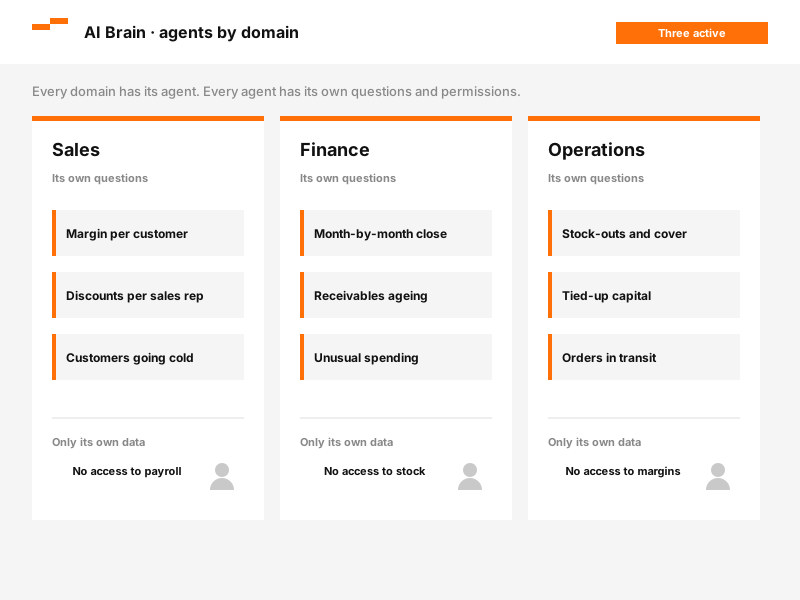
One for sales, one for finance, one for operations. Each with the questions, metrics and vocabulary of its area, and no access to what is not its business.
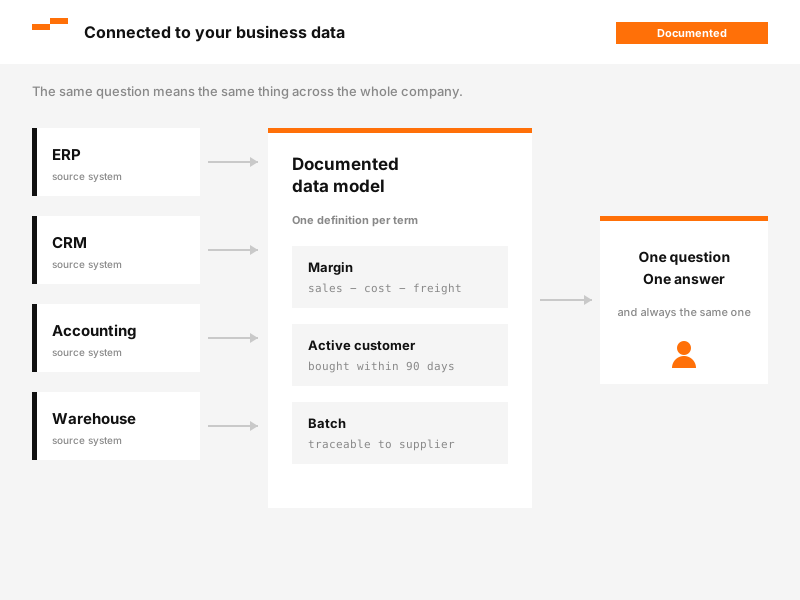
The ERP, the CRM, the accounts and the warehouse, with the data model documented so that the same question always means the same thing.
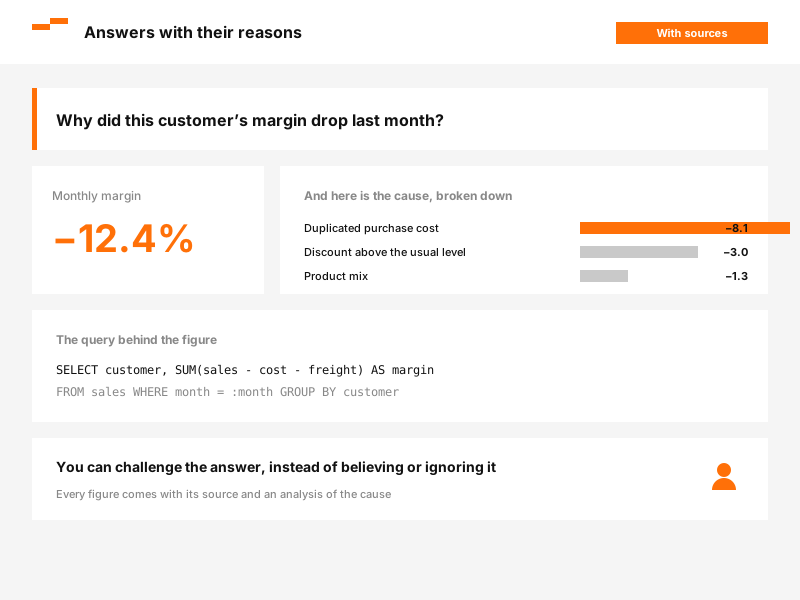
Every figure arrives with the query that produced it and an analysis of the cause. That way the answer can be discussed, rather than simply believed or ignored.
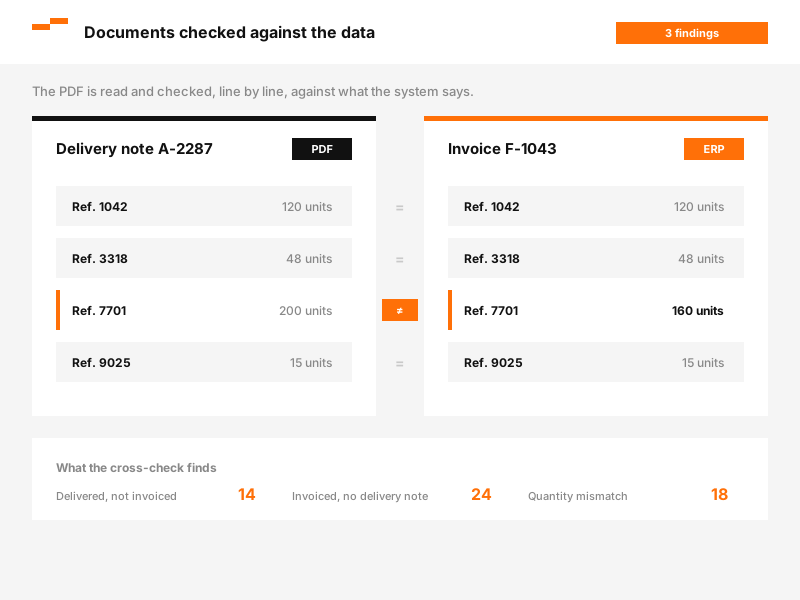
Delivery notes, invoices and contracts read and compared with what the system says. Out come the lines that do not match, one by one and with their amount.
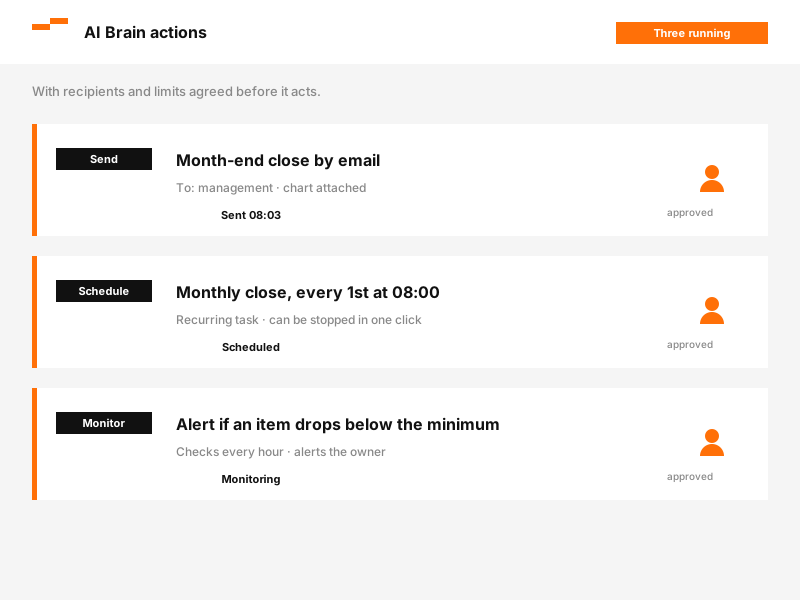
It emails the report, schedules the close for the 1st of every month and watches a figure to alert you when it goes out of range. With recipients and limits agreed in advance.
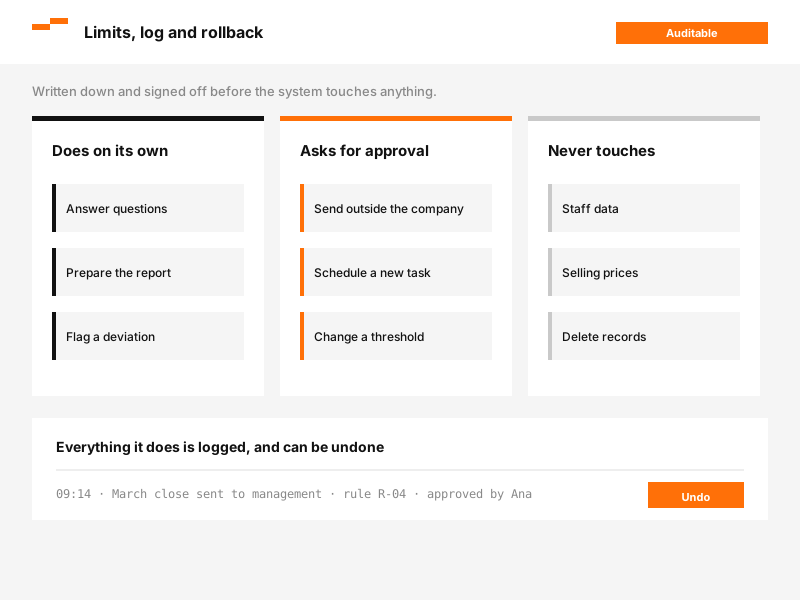
What it can do on its own, what needs approval and what it never touches. Every action is logged with its reason and can be undone.
Five steps, and the first is choosing a single domain.
Sales, finance or operations: whichever takes the most hours of analysis today. The others come later, once the first is in daily use.
We sit down with whoever requests the reports and note the questions that come back every month. That tells us what the agent needs to know and which skills it has to learn.
We check that the data this domain needs is reliable and agree with you what it may do on its own and what it may not. If the data is not there, we say so before automating anything.
For the first few weeks it answers and proposes, but does not execute: we compare its answers with your team's. When they match, it starts acting under supervision.
With the first domain stable, we widen the limits or add the next one. Everything documented, and your team able to change the rules without calling us.
Business Intelligence gives you the figure someone decided to show. The AI Brain takes whatever question occurs to you, including the one nobody foresaw when the dashboard was designed, and gives you back the cause.
One does not replace the other, and the order matters. The AI Brain answers on the metrics that BI has already agreed and validated. If ‘margin’ means three different things depending on who asks, the answer will be open to dispute. That is why Business Intelligence sits underneath.
Nor is it a knowledge assistant or a stand-alone agent. An AI knowledge base answers from your documents and cites the source; an AI agent carries out one specific task in your operations. The AI Brain works on your business data, checks your documents against it and acts on what it finds.

Who buys most and at what margin, which customer is cooling off and why August's dropped. With discounts by salesperson and by product family alongside, which is usually where the explanation lies.

Month-by-month close with the spending that went off track flagged, and debtor ageing with the customer behind most of the delay. The question ‘what happened that month?’ gets its answer in the same conversation.

Stock-outs, cover and capital tied up in what does not move, cross-checked with the orders already on their way and their supplier. It stops being an inventory and becomes a list of decisions.

Delivery notes against invoices, line by line: delivered but not invoiced, invoiced without a delivery note, and quantities that do not match. The PDF is read and checked against the ERP.

The report that arrives by itself on the 1st of every month, the alert when a product drops below its minimum and the email to the person in charge with the chart inside. With recipients and limits agreed beforehand.
What people ask before letting a system decide on its own. If yours is missing, write to us.
Let's talk about your projectYou do. A business owner sets, process by process, what it executes alone, what needs approval and when it must stop. Anything else, it asks.
You see it and undo it. Every decision keeps the data and the rule behind it: the error is found, reversed and the rule corrected. The AI Brain also learns from its mistakes and adjusts how it behaves.
Anything outside the approved rules, or anything without reliable data. It does not replace strategic judgement or the decisions that people must sign off: it prepares them, it does not take them.
Yes. Through an API or directly on the database. Without an API, the integration is more complex and it is up to you to weigh it up.
It depends on the systems the process touches and on how complex its rules are, which is what really drives the work. The price is fixed after we sit down with whoever does that process by hand today.
The knowledge assistant looks things up in your documents and cites the source; the agent carries out one specific task. The Enterprise AI Brain works on your business data: it analyses what your Business Intelligence already measures in depth, explains why things happen and sets in motion what you decide. The practical test: if you need a task done, it is an agent; if you need to understand your numbers and act on them, it is this.
It is the last step of the journey in three industries, and on purpose: analysing the business in depth needs the architecture, the data and a Business Intelligence layer people trust to be in place first. It fits most literally in logistics and supply chain, where the dashboard already measures margins, stock turnover and service levels and what is missing is knowing why they move. Also in manufacturing and food, to understand cost and production variances, and in healthcare, to explain the month-end close and its differences.