AI knowledge base

(RAG)

AI knowledge base (RAG) for your company's documents.

The answer is already written down somewhere in your company: a contract, a procedure, a manual. The problem is finding it in time.

We build the assistant that answers by citing the exact document, respects each person's permissions and only replies with what is written in your documents.

AI knowledge base (RAG)

What an AI knowledge base is

An assistant that answers questions about your company's documentation by citing the source, within each user's permissions and without straying beyond what is written.

An AI knowledge base connects to wherever your documents already live: SharePoint, Drive, the document management system, network drives. It lets people ask them questions in plain language. The notice period in a supplier contract. The procedure when a quality test fails. Whether that incident had happened before and how it was resolved. The answer arrives in seconds, with the passage it comes from and a link to open the document.

The technique behind this kind of document AI is called retrieval augmented generation, or RAG. Before answering, the system retrieves the relevant passages from your documentation and forces the model to answer only from them. That is why it is not a generic chatbot: ChatGPT does not know your contracts; this assistant knows nothing else. And when the answer is not in the documents, it says so.

1cited source, at the very least, in every answer
0documents visible beyond the permissions each user already has
24 hmaximum delay between a new document and its availability in the assistant

Three quick questions

Three questions that always come up, answered plainly.

What it is

How is it different from ChatGPT or Copilot?

It answers from your documents, not from the internet, and shows you where every sentence comes from. It also controls which documents each person can see, and what it does when there is no answer: say so.

Who it is for

Does it make sense for my company?

Yes, if there is documentation that many people consult and only two or three really know: contracts, procedures, technical data sheets, regulations. The more the company depends on those people, the sooner it pays for itself.

When

How long until it is up and running?

The first useful assistant, on a defined set of documents, takes 4 to 8 weeks. We start with the folder that generates the most questions, not by indexing everything.

How to tell you need it

Nobody asks for a knowledge assistant. They ask to stop searching, and that sounds like one of these four things.

The answer exists, but nobody can find it

The procedure has been written down since 2019. Even so, every time it is needed, someone asks around the office or forwards the same old PDF.

Two people are the company's search engine

Whoever has been there twenty years knows which contract holds each clause. When they are on holiday, the question waits until they are back.

Every version of the document goes its own way

There are three versions of the manual in three folders, and none of them says which one is current. People work with whichever turned up first.

You have already tried ChatGPT and it will not do

The team pastes chunks of contracts into public tools to make sense of them. Nobody knows where that text ends up, or whether the answer was right.

What we build

Six pieces that work together. The last three are what separate an impressive pilot from a system you can rely on.

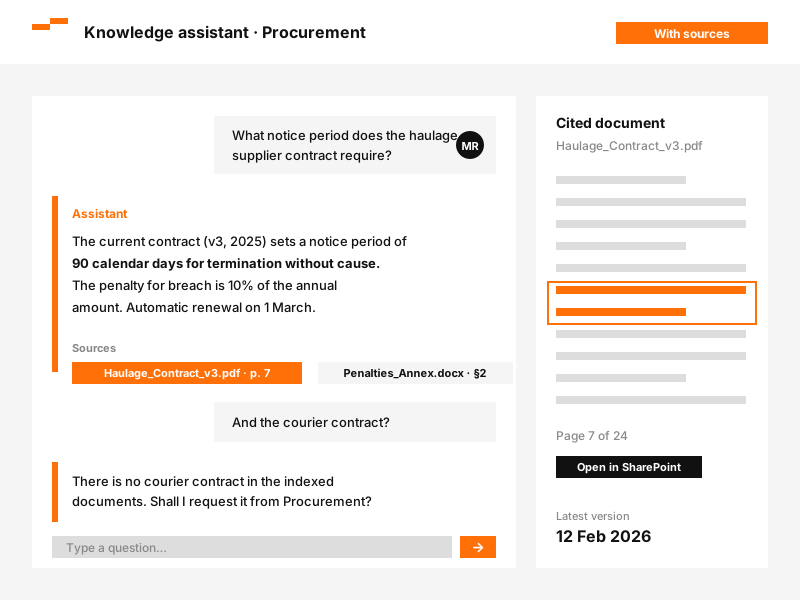
Mockup: Knowledge assistant · Procurement
01

Question-and-answer window with citations

Your team asks in their own language and gets the answer with the exact passage and a link to the document. It sits inside Teams, Slack or your intranet.

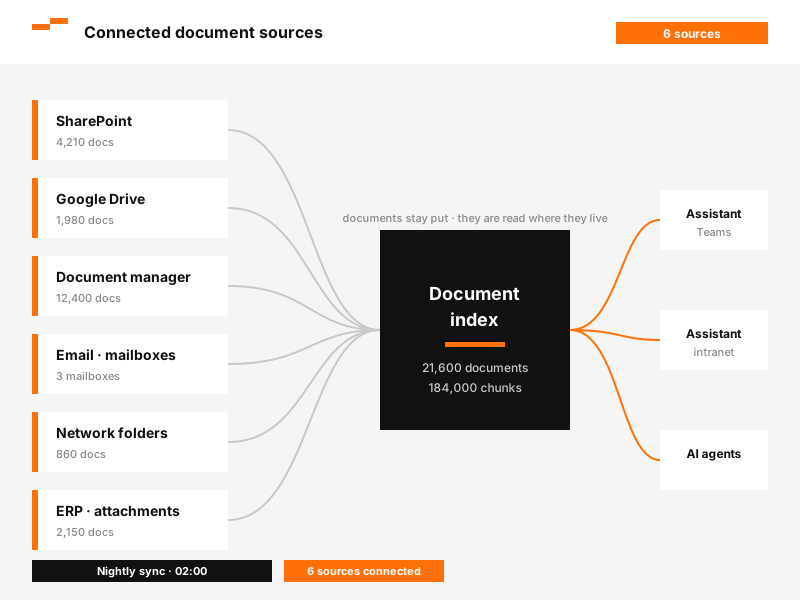
Mockup: Connected document sources
02

Connection to your document sources

SharePoint, Google Drive, the document management system, email, network drives and the ERP if needed. The documents do not move: the assistant reads them where they live.

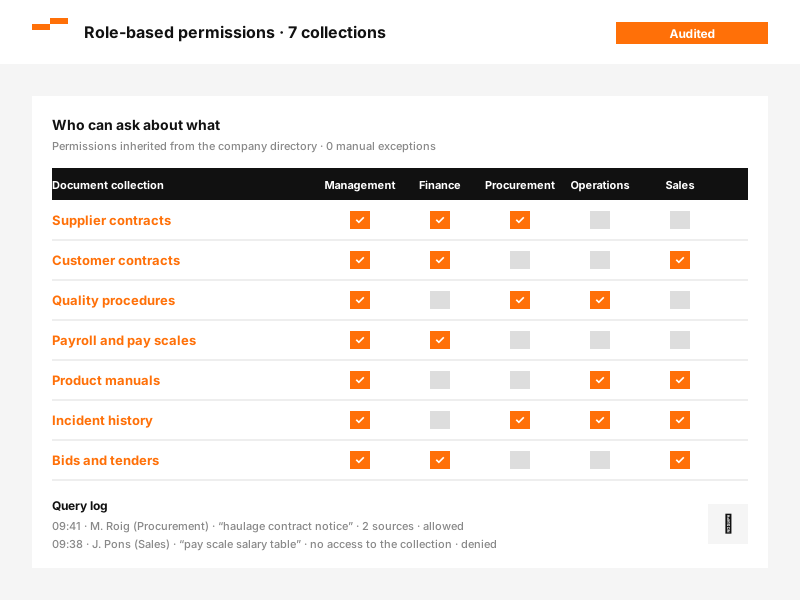
Mockup: Role-based permissions · 7 collections
03

Permissions by user and by role

Each person only gets answers from the documents they could already open. Permissions are inherited from your directory, and there is a record of who asked what.

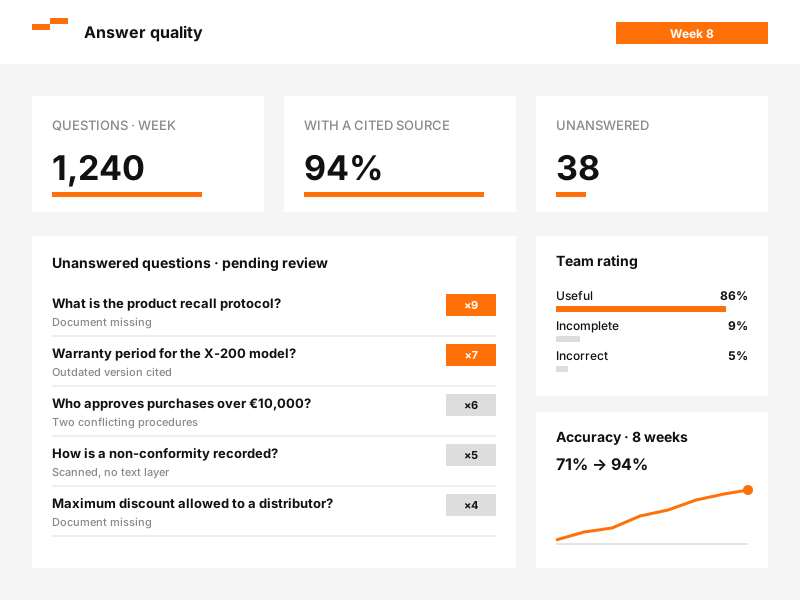
Mockup: Answer quality
04

Answer quality control

A dashboard of unanswered questions, badly rated answers and missing documents. It is what makes the team's trust grow instead of breaking.

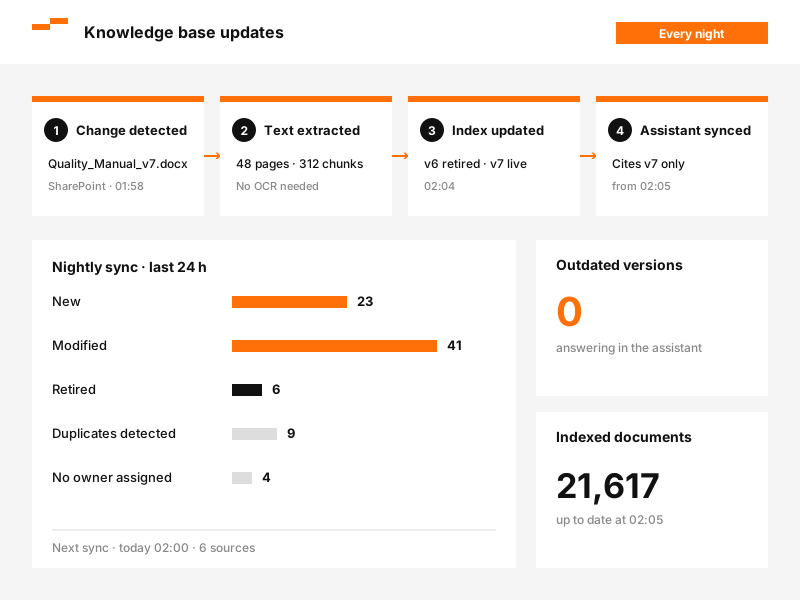
Mockup: Knowledge base updates
05

Automatic updates to the knowledge base

When a document changes, the old version stops answering. Scheduled synchronisation, duplicate detection and alerts for documents that are out of date or have no owner.

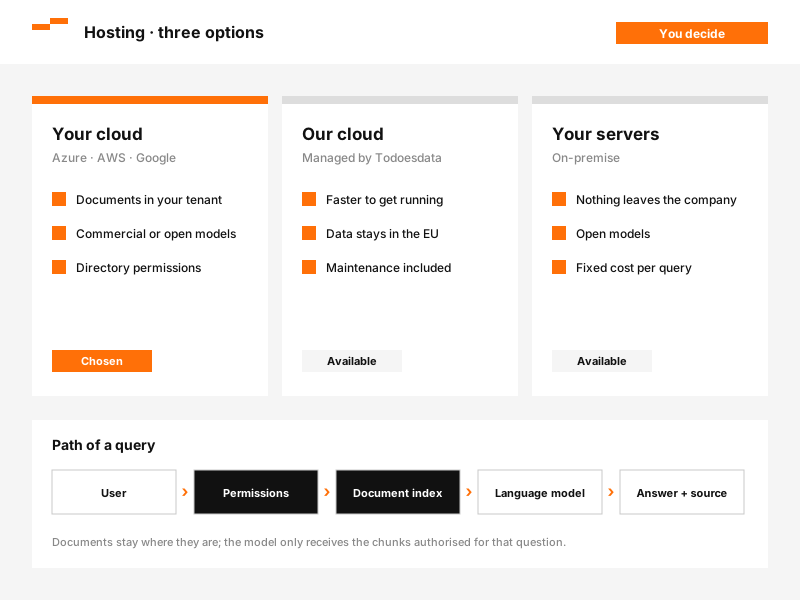
Mockup: Hosting · three options
06

Hosting on your terms

In your cloud (Azure, AWS, Google) or on your own servers, with closed or open models depending on how sensitive the documents are. You decide.

How we work

Five steps, and the first is deciding which documents do NOT go in yet.

  1. 1

    The documents that generate the most questions

    We choose a defined set with you: supplier contracts, the quality manual or the incident history. Not the whole server.

  2. 2

    Documentation audit

    Formats, versions, duplicates, scans with no text layer and current permissions. This gives us the real timeline and tells us what needs cleaning before indexing.

  3. 3

    A first assistant with real users

    Within weeks, using the questions the team actually asks. We measure how many it answers well, how many it cannot answer and why.

  4. 4

    Tune it until it can be trusted

    We improve retrieval, add the missing documents and fix the cases that fail. With the team in the room, not back at our office.

  5. 5

    Handover, expansion and independence

    Documented, and with your team able to add sources. Then, if you want, more departments, or the step up to agents that act on what the assistant knows.

We work with the technology you already have

How ChatGPT differs from a RAG knowledge assistant

Paste your procedure into ChatGPT and ask it a question. The answer comes from three places at once and does not tell you which: partly from what you pasted, partly from what it read on the internet when it was trained, and partly from what it made up so the sentence would fit. All three arrive in the same confident tone.

An AI knowledge base cannot do that. Before answering, it looks for the passages that deal with your question inside your documents and forces the model to answer only from them. That is the technique the industry calls RAG. It is why every answer comes with the document, page and version it is drawn from, and why, when the answer is not in your documents, it says so instead of filling the gap.

The practical difference shows in what you can do next. A ChatGPT answer has to be checked before you use it, and checking it costs as much as finding it yourself would have. An answer with its citation can be checked in ten seconds by opening the document, and that is the only thing that turns this into a working tool.


The same question
ChatGPT AI knowledge base (RAG)
Three sources mixed upOnly your documents
No citationDocument, page and version
Fills in the gapsSays it isn’t there

Where it applies

01 Quality and operations
02 Contracts and legal
03 Technical support and customer service
04 Sales and tenders
05 People and administration
01 Quality and operations
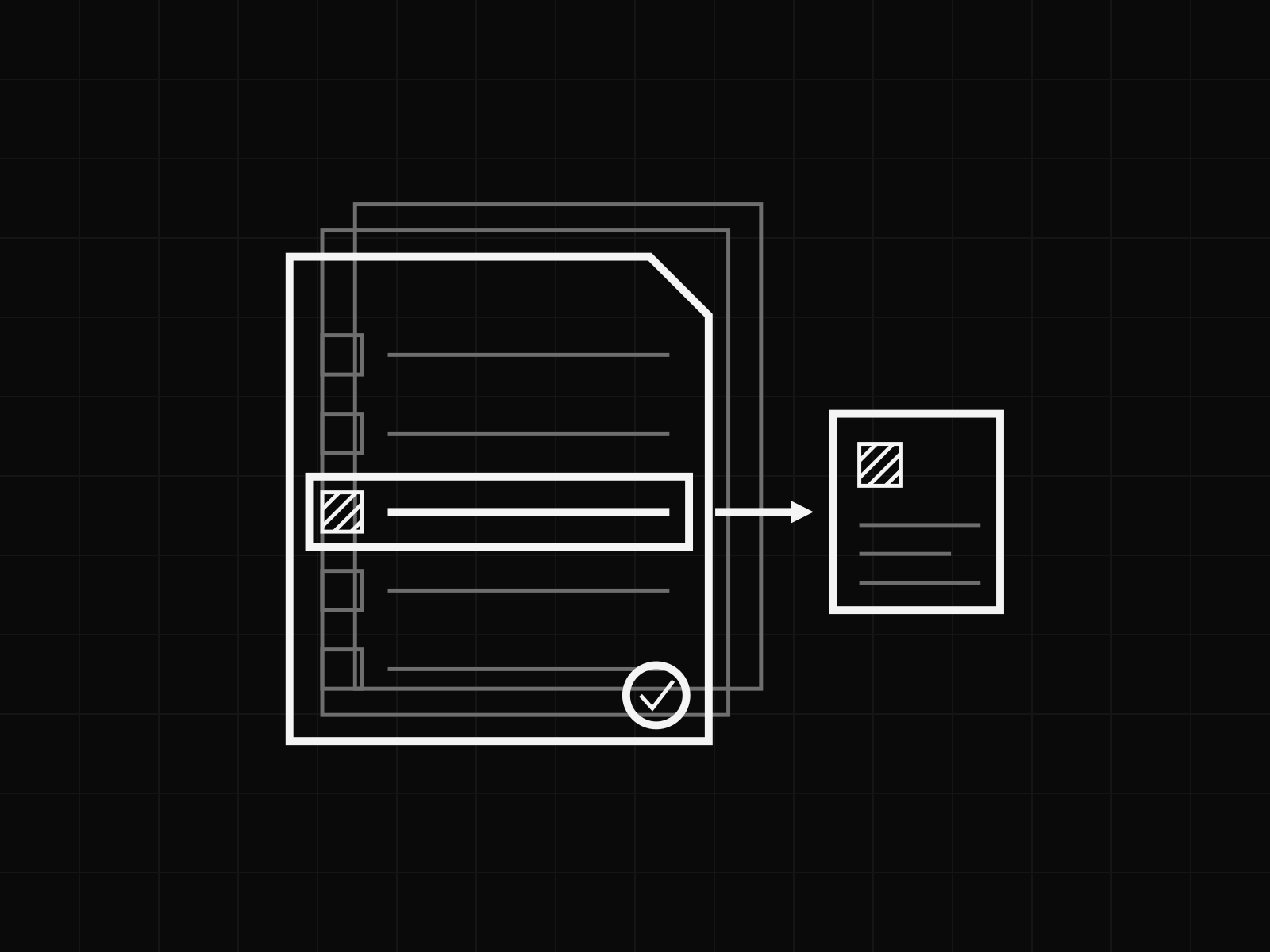
Line illustration: procedure sheet with one step highlighted, a current-version mark and the extracted step set apart
01

Quality and operations

Procedures, work instructions, ISO standards and technical data sheets. Someone on the shop floor asks and gets the exact step from the current version, without searching the server or phoning the office.

02 Contracts and legal
Line illustration: contract with a highlighted clause and a signature
02

Contracts and legal

Clauses, deadlines, renewals and penalties in customer and supplier contracts. This is where the automatic renewals nobody had noted down come to light.

03 Technical support and customer service
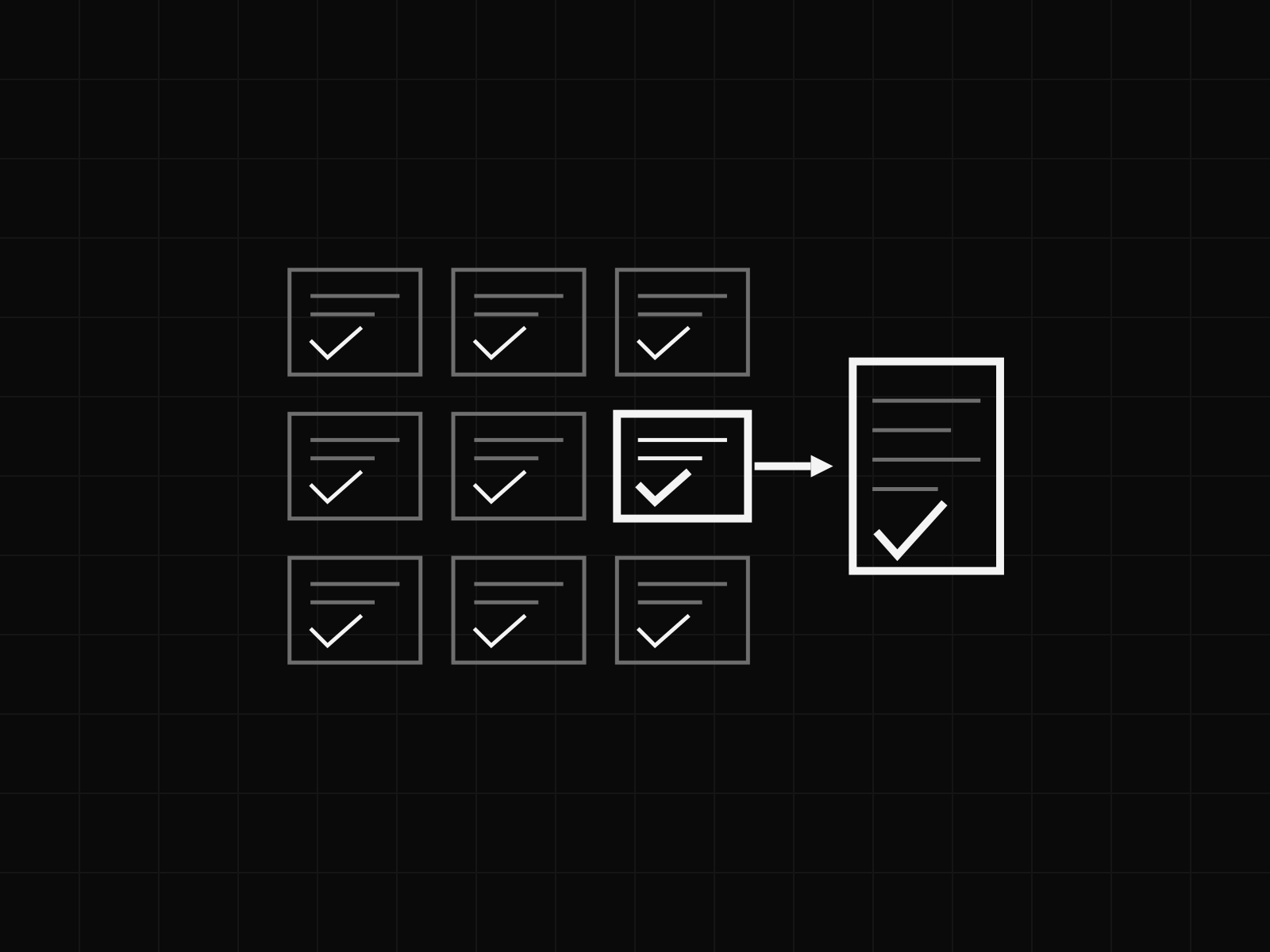
Line illustration: archive of closed incidents from which one resolution is extracted
03

Technical support and customer service

Product manuals and the history of resolved incidents. A technician in their first month answers like one with ten years behind them, because both consult the same resolutions.

04 Sales and tenders
Line illustration: stack of proposals with a price table, a total and a seal
04

Sales and tenders

Previous proposals, tender specifications, certificates and references. Preparing a proposal is no longer a hunt through the folder of the last similar one.

05 People and administration
Line illustration: policy sheet with checkboxes and a team of people
05

People and administration

Collective agreements, internal policies, protocols and staff announcements. The questions HR hears again and again answer themselves, with the source, and only for those allowed to see it.

Frequently asked questions

The doubts that appear as soon as anyone mentions touching the company's documents. If yours is missing, write to us.

Let's talk about your project
Do my documents leave the company?

Only if you decide they should. It can be deployed in your cloud, in ours or on your own servers. With models that are contractually barred from training on your data, or with open models inside your own infrastructure.

What if it makes the answer up?

It only answers from passages in your documents, and it shows them. If it cannot find the information, it says so. We measure the accuracy rate with real questions before opening it up to the team.

And when the documents change?

They are synchronised at the agreed frequency, usually every night. The new version replaces the old one; if a document is deleted, it disappears from the assistant.

How much does it cost?

There are two parts. The project depends on the state of the documentation and on how many sources need connecting. Usage is paid per query, and it is estimated from your real volume before anything is signed.

What do I need to have in place first?

Digital documentation, and someone who knows which version is the right one. We process the scanned documents; the audit brings the duplicate versions to light.

How does it relate to AI agents?

The assistant answers; the agent acts. An agent that handles incidents needs to know how the previous ones were resolved, and the assistant is what provides that. It is the first step, and the safest one.

Which industries have you applied it in?

It is the entry point in construction and engineering: a tender document can run to three hundred pages, with the conditions that decide the margin scattered through it. It comes second in yachting and marine, with haul-out reports, job sheets and refit specifications. And it also leads in professional services, the only industry where the document does not come with the product: it is the product being sold.