AI

consulting

AI consulting for businesses.

Everyone tells you that you need to ‘do something with AI’. Nobody tells you what, in what order, or how much you will get back.

Data and AI strategy for leadership teams: what to do, in what order and with what return, from a company with more than 100 projects in production.

AI consulting

What AI consulting is

Deciding which of your company's problems AI can solve today, in what order to tackle them and what data you need, before spending a single euro on development.

AI consulting starts with the business, not with the technology. We look at how your company works. Where the hours go on repetitive tasks, which decisions are made on incomplete data, which questions nobody can answer with confidence. It is an AI readiness assessment of the business as much as of the data. Out of it comes an inventory of use cases, each with its estimated impact, its effort and the data it needs.

The difference from a talk on trends or a course on generative AI is that you leave with a roadmap you can execute. The first project defined, the budget bounded and the criteria for measuring whether it worked. It is not training, and it is not a ‘transformation’ programme. It is a plan to put AI to work on real tasks in your company, coordinated by a team that has been putting AI projects into production since 2020.

1roadmap with the use cases ranked by impact and effort
4-6 wksfrom the first meeting to the delivered roadmap
0euros committed to development before there is a business case

Three quick questions

What we are asked in the first meeting, answered in two lines.

What it is

How is it different from commissioning an AI build straight away?

The first step is deciding what is worth building. A development project solves the problem you hand it; consulting checks that it is the right problem and that you have the data to solve it.

Who it's for

Does it make sense for my company?

Yes, if you have processes with volume: hundreds of emails, orders, invoices or support tickets a month. Below that, AI rarely repays the effort, and we will tell you so in the first session.

When

How long before it shows results?

The roadmap takes four to six weeks. The first use case up and running, depending on which one is chosen, takes two to four months after that. We start with the one that hurts most, not the flashiest.

How to tell if you need it

Nobody arrives asking for AI strategy consulting. People arrive fed up with one of these four things.

You have tried ChatGPT and nothing has changed

Several people use it on their own, someone set up a pilot, and six months later not a single process in the company works differently. Some of your people use AI; your company doesn't.

AI proposals keep arriving and you can't evaluate them

Three suppliers, three very different prices, and none of them explains what data they need or how the result will be measured. Deciding like that is gambling.

You know where time is lost, but not where to start

Accounts types in invoices, sales writes every proposal from scratch, customer service answers the same questions every day. Everything looks like a candidate and nothing gets going.

Leadership wants a plan and nobody can write it

The board wants to know what the company will do with AI next year. Today the answer is a list of ideas with no cost, timeline or owner.

What we build

Six deliverables that come out of the consulting work. Each one answers a question nobody can answer with confidence today, and together they make up the roadmap.

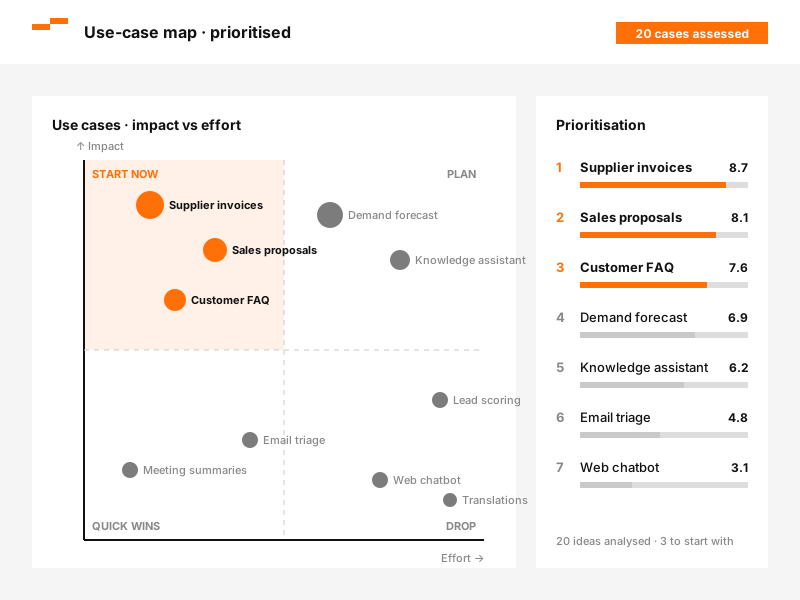
Mockup: Use-case map · prioritised
01

Map of prioritised use cases

Everything AI could do in your company, ranked by economic impact and effort. Out of twenty ideas come three worth starting now and ten that don't pay off.

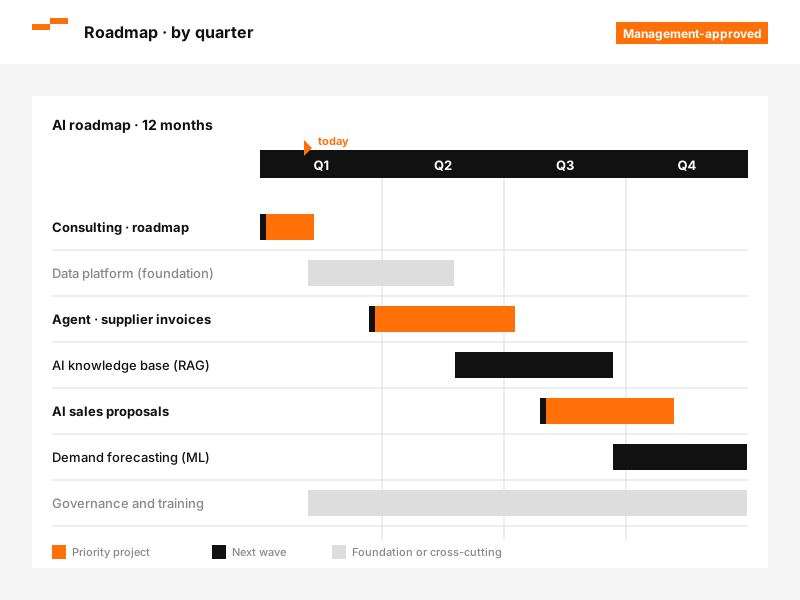
Mockup: Roadmap · by quarter
02

Quarter-by-quarter roadmap

What gets built, when, and what has to be ready beforehand. A calendar that leadership can approve, budget for and track.

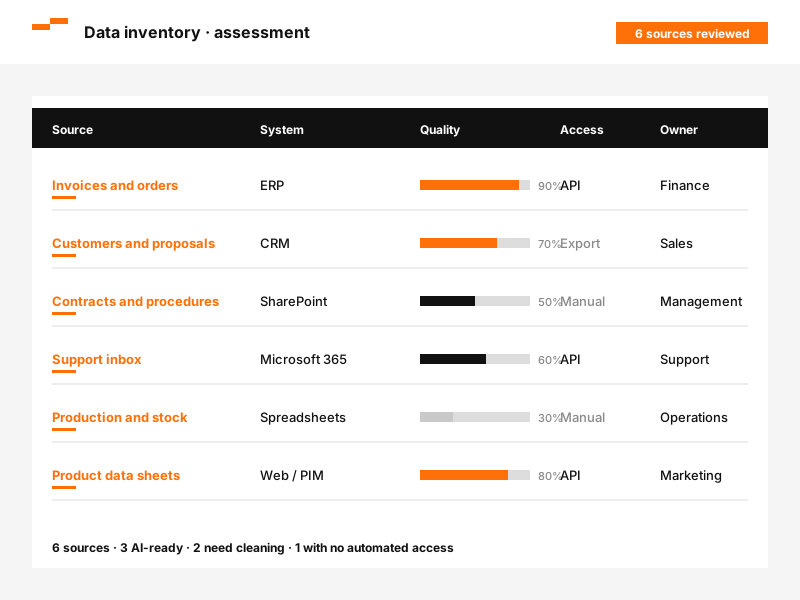
Mockup: Data inventory · assessment
03

Data inventory and diagnosis

What data exists, in which system, at what quality and who controls it. It decides whether a use case is viable in three months or needs a data platform first.

Data platforms
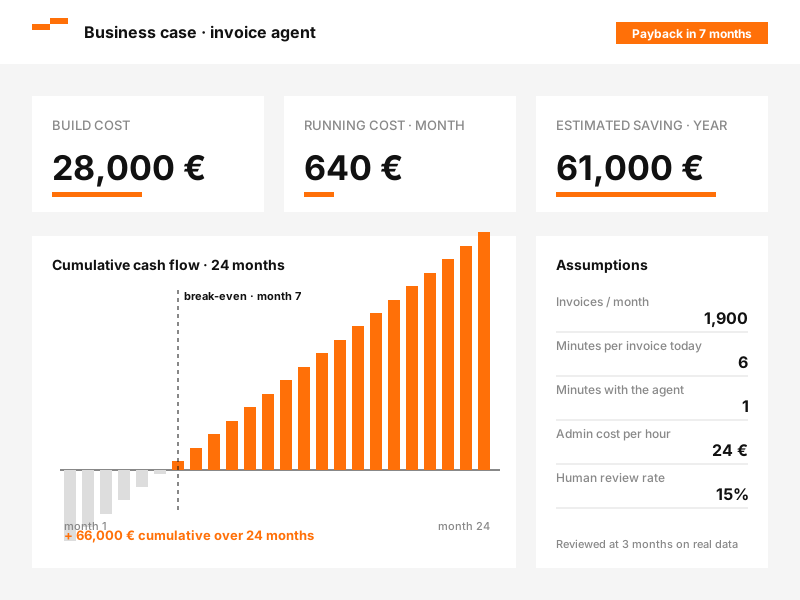
Mockup: Business case · invoice agent
04

Business case for each project

Cost to build, cost to run (licences, model usage, maintenance) and expected savings, with the assumption written down so it can be checked later.

Mockup: First project brief
05

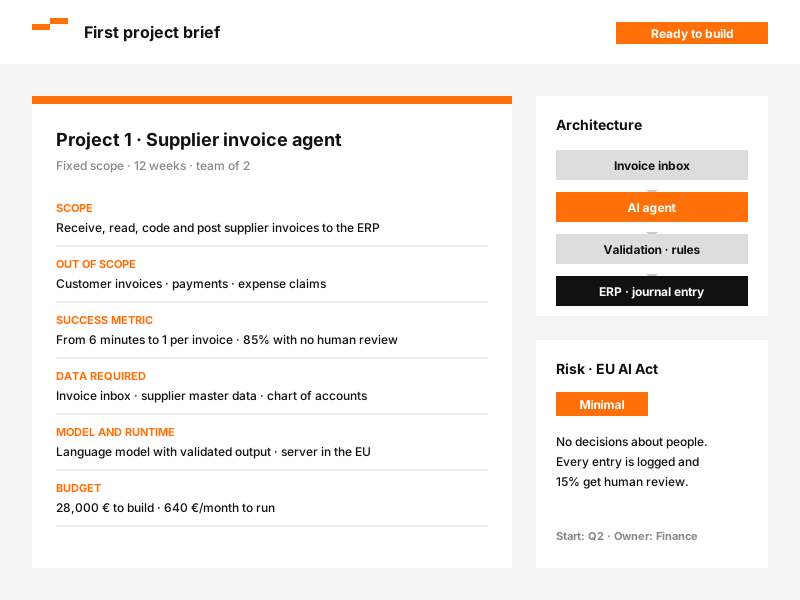
First project brief

Closed scope, success metric, architecture and chosen model. If it is an AI agent, it leaves here ready to be built.

AI agents
Mockup: AI governance · policy and risk
06

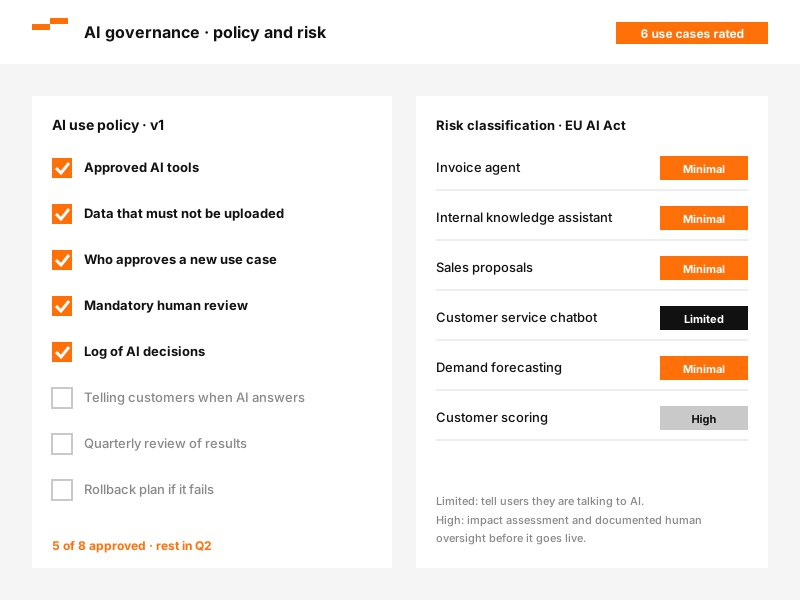
AI governance and responsible use

An internal usage policy, who approves what and how the decisions AI makes are recorded. Plus what the EU AI Act requires in your case. Just enough not to slow you down.

How we work

Five steps over four to six weeks. The first one isn't about AI.

  1. 1

    Understand the business

    Interviews with leadership and with the people who do the work every day. We look for repetitive tasks with volume, decisions made blind and knowledge that lives in two people's heads.

  2. 2

    Inventory the data

    Systems, documents, emails, spreadsheets. What exists, at what quality and who controls it. Without this step, any roadmap is fiction.

  3. 3

    Analyse dependencies

    Not every step you need to take depends on AI alone. We review the technology you already have, propose the improvements it needs and represent you in front of your suppliers.

  4. 4

    Prioritise

    Each use case is scored on impact, effort, available data and risk. Three candidates come out, not thirty, and the order is argued with numbers.

  5. 5

    Present and decide

    The roadmap goes to leadership, with the business case for each project. The outcome can be ‘we start with this’ and it can also be ‘not yet’: if AI doesn't pay off, we say so.

We work with the technology you already have

Consulting decides; the rest of the catalogue builds

Consulting decides; the other products build. This is where the roadmap comes from, with the use cases prioritised and split between those our products can cover and those your technology suppliers should handle.

If the winning use case is a task a person does step by step today, we build an AI agent. If it is answering questions about internal documents, an AI knowledge base (RAG). If it is a complete process that crosses several systems, AI workflow automation. If the diagnosis shows the data isn't ready, a data platform or a Business Intelligence dashboard comes first. And if you need to predict demand, bad debt or breakdowns, Machine Learning.

That is why consulting is not a report that gets filed away. It is the step that stops you building what you don't need, and it makes sure every AI implementation has data, an owner and a metric. Typically a roadmap produces two or three projects of three to six months each, and the success of the first one makes the next ones easier.


Scattered ideas

  • Chatbot
  • Dashboards
  • RPA
  • Data lake
  • Copilot
  • Forecasting
AI consulting

Roadmap

Where it applies

01 Finance and administration
02 Customer service
03 Sales and proposals
04 Operations and logistics
05 Internal knowledge
01 Finance and administration
Line illustration: two documents matched line by line, with a tick
01

Finance and administration

Supplier invoices that record themselves, bank reconciliation and replies to claims. This is where repetitive hours pile up most in a mid-sized company, and where the return is easiest to measure.

02 Customer service
Line illustration: two speech bubbles and a person
02

Customer service

An assistant that answers with your company's information and escalates what it doesn't know. It also shows which questions keep coming back and which documentation is missing.

03 Sales and proposals
Line illustration: stack of proposals with a price table, a total and a seal
03

Sales and proposals

A proposal put together in minutes from the price history, the customer's terms and the current catalogue. And an early signal of which customers are buying less, before they leave.

04 Operations and logistics
Line illustration: route with stops and a destination
04

Operations and logistics

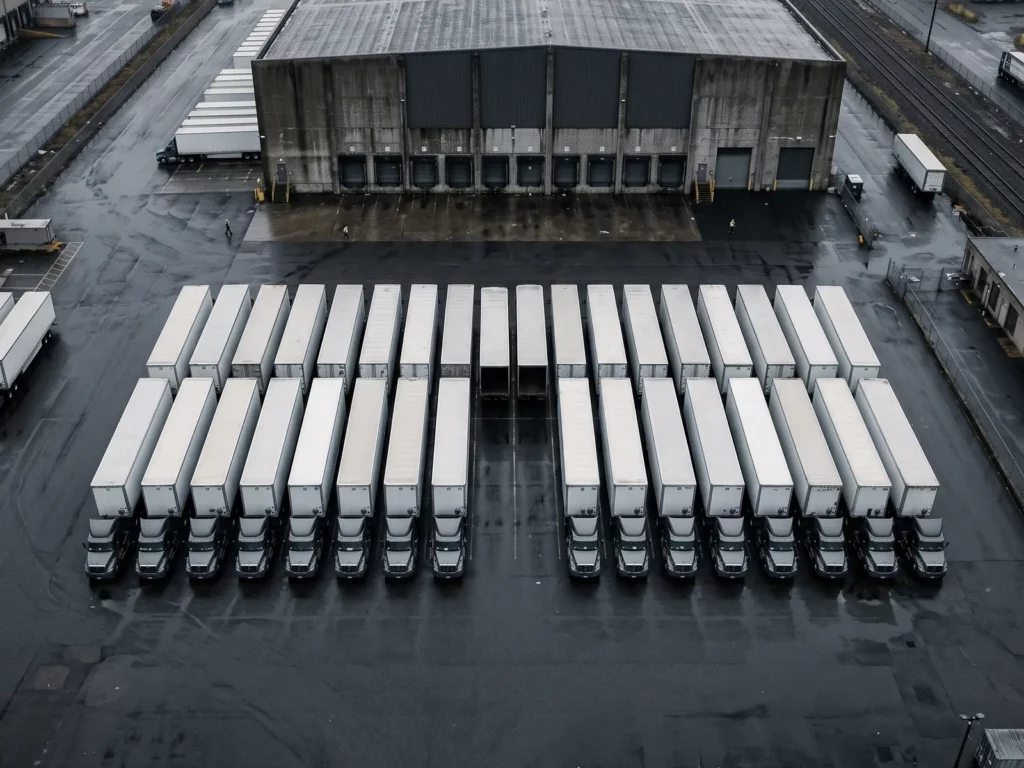
Demand forecasting, stock calculation and shift or route planning with real data. This is work we have already delivered.

05 Internal knowledge
Line illustration: grid of documents and a magnifying glass
05

Internal knowledge

Procedures, regulations, technical sheets and contracts available with a single question. It is the first thing companies ask for when they depend on two or three people who ‘know everything’.

Frequently asked questions

The ones that come up on the first call. If yours is missing, write to us and we will add it.

Let's talk about your project
How much does AI consulting cost?

It depends on how many areas and systems need analysing and how many people need interviewing. We give a fixed price after a first introductory session: that session is enough to see the scope.

Do I need my data in order first?

No. Diagnosing its state is part of the work. If it isn't ready, the roadmap puts a data platform first: we don't build an agent on data nobody trusts.

Is it training for my team?

No. There are sessions with the team to explain what will be built and why, but the deliverable is a plan of projects, not a course.

What happens when the consulting ends?

The roadmap, the business cases and the architecture are yours, and they are documented. You can build with us, with another supplier or with your own team.

Which AI models do you work with?

OpenAI, Anthropic, Google and open models, depending on the case: cost, confidentiality, language and answer quality weigh differently in each project. We don't choose a provider before we understand the problem.

How does it fit with the EU AI Act?

Almost all the use cases in a mid-sized company are minimal or limited risk, and they only require transparency. Those that affect people carry extra obligations; we classify every one of them.

Do you work in my industry?

Seven industries have their own page: construction and engineering, manufacturing and food, travel and hospitality, yachting and marine, professional services, healthcare and logistics and supply chain. And we work with clients in many more. The diagnosis is the same in all of them; what changes is where you start, and that is set out on the page for each industry.