

Do you argue about whether the figure is right instead of what to do with it?
You are in ‘Organise’. It is time to build the warehouse and the quality rules: nothing else holds up on top.

Products
in data and AI
The catalogue
Not by technology, but by where your company is on the path. That is something you know without anyone's help.
Most catalogues from an AI consulting firm or an AI development company are organised by technology, which forces the client to know what technology they need before they can choose. It works the other way round: what you know is where you stand and what hurts.
So each product has its place in a sequence. If your data is spread across six systems that don't talk to each other, you don't need an AI agent yet: you need to organise. And if leadership already opens a dashboard every morning, the next step is not another dashboard.
The catalogue covers the whole path and keeps growing. If what you need isn't listed here, it almost always fits one of the five stages, and we look at it in the same way.
Five stages. You go through them in order, and skipping a whole one is expensive.
You don't know where you stand or what AI would do for your company. We run a diagnosis, rank use cases by return and produce a roadmap with timelines. This is also where you decide what not to do yet.
The data exists, but it is scattered, it contradicts itself and nobody trusts it. We build the warehouse, the automated loads and the quality rules. It is the foundation for everything that follows.
The data is now reliable, and it is time to see it and get ahead of events. Dashboards with metrics everyone has agreed on, and models that predict demand, bad debt or breakdowns before they happen.
Information stops being looked up by hand. Your company's knowledge answers questions on its own and cites the source, and repetitive tasks run end to end under supervision.
Complete processes make decisions and run within the limits you set. People stop operating and focus on the exceptions and on what nobody else can do.
Filter by stage and keep only the products for your point on the path.
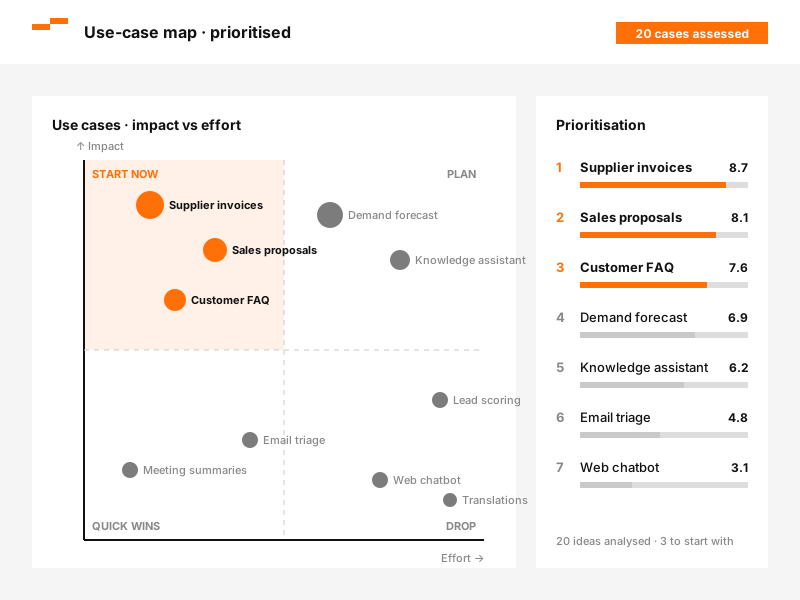
The way in. A diagnosis of where you stand, use cases ranked by return and a roadmap. It also tells you what NOT to do yet.
See the product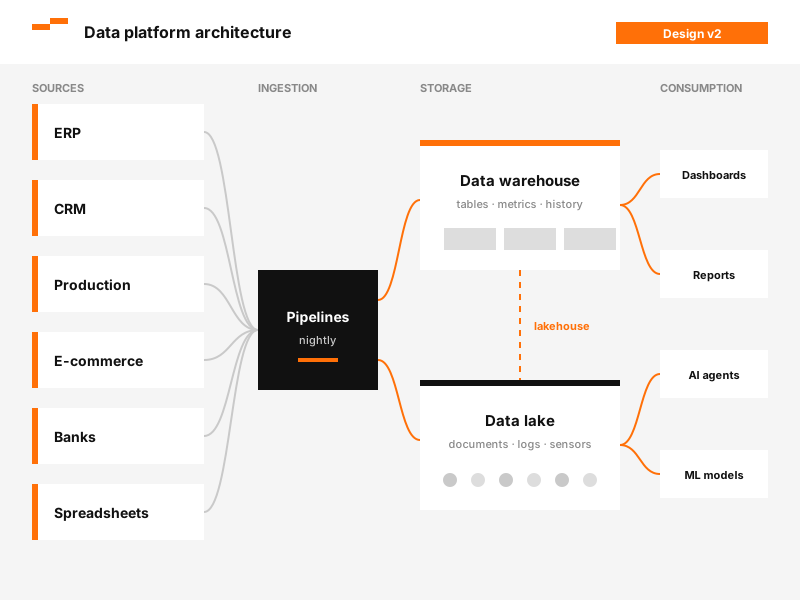
Warehouse, lake, automated loads, quality and governance. The floor under everything else: without it, whatever you put on top inherits the mess.
See the product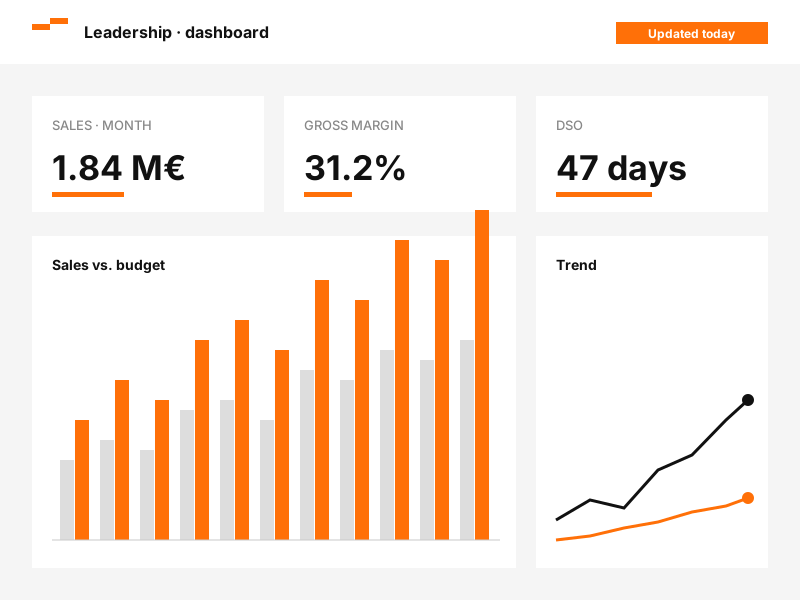
Dashboards by role, a metrics dictionary and reports that send themselves. The figure everyone trusts.
See the product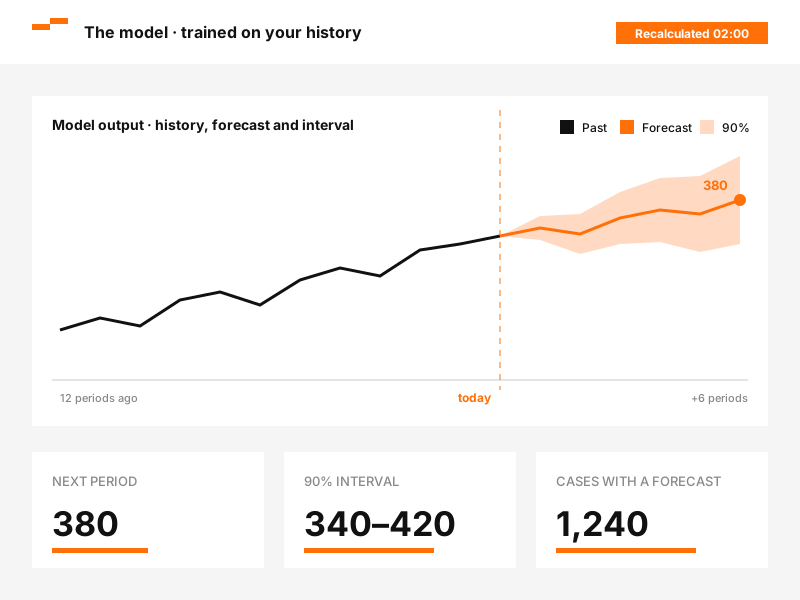
Models that predict demand, bad debt, churn or breakdowns from your historical data, built into day-to-day operations rather than left in a notebook.
See the product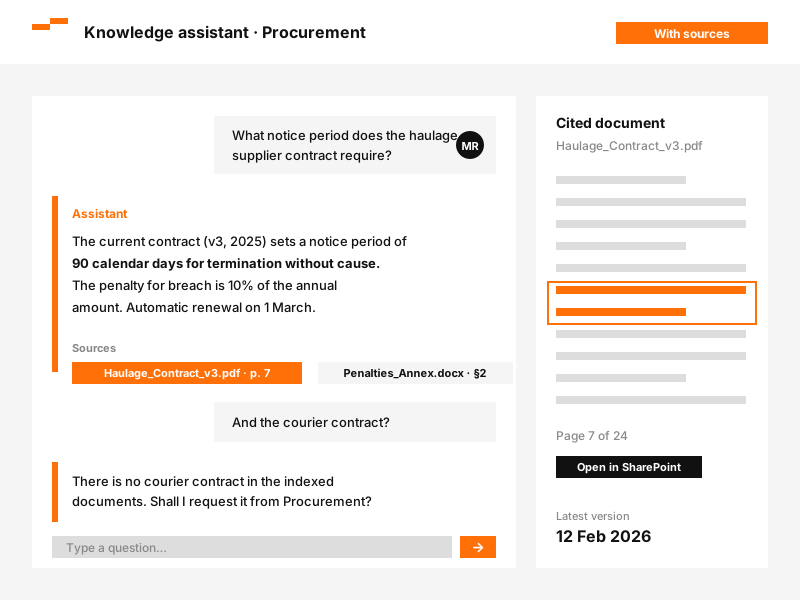
Questions about contracts, procedures and regulations answered with the source document cited, with permissions per user and without making things up.
See the product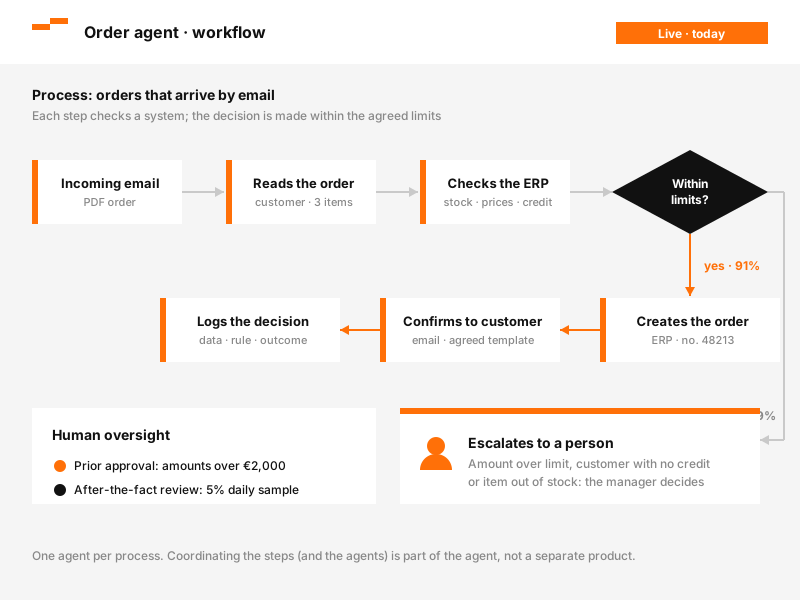
Business tasks carried out end to end: they query your systems, decide within their limits and act, with supervision where it matters.
See the product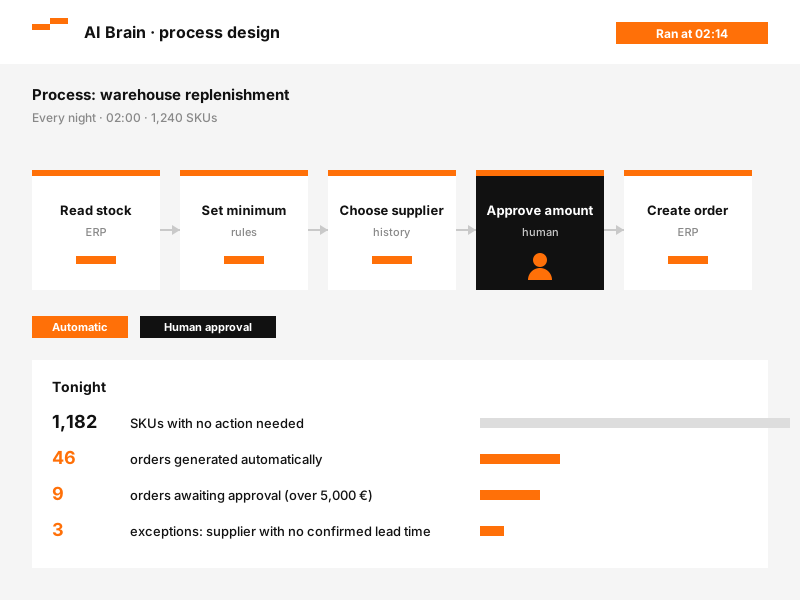
Complete processes that reason over your data, make decisions and run on their own: replenishment, month-end close, orders, claims.
See the productIt is the most common situation, and it has an answer before you spend a single euro on development.
You are in ‘Organise’. It is time to build the warehouse and the quality rules: nothing else holds up on top.
You are between ‘Decide’ and ‘Innovate’. It is time to predict and automate the repetitive work, not to build another report.
You are in ‘Explore’. A discovery session places you on the path and gives you the roadmap before you commit any budget.
The ones we are asked before a product is chosen.
Let's talk about your projectIn order, yes, but not in full. You can make decisions with data that isn't perfect yet, and you can automate one specific process without having organised the whole company. What doesn't work is skipping a stage entirely: an AI agent running on contradictory data amplifies the mess instead of fixing it.
One or two. Typically a roadmap produces two or three projects of three to six months each, and the first one pays for the ones after it.
It depends on the pain they arrive with. ‘I don't trust the figure’ leads to Business Intelligence. ‘Someone does this by hand every day’ leads to AI agents or to workflow automation. ‘The knowledge lives in two people's heads’ leads to the AI knowledge base.
With a knowledge assistant over a limited set of documents, or with an agent that does a single repetitive task. They are the two projects that show visible results soonest, and neither needs your whole house in order first.
Yes, it is the most common case. We start with the diagnosis and with organising the bare minimum the first useful project needs. Not with a full platform that takes a year.