Construction

& engineering.

AI in construction.

Tender documents run to hundreds of pages, monthly valuations arrive late and a project's cost overrun only becomes clear when it can no longer be corrected.

Here AI does not start with a dashboard: it starts with the paperwork, which is where the time goes.

Construction & engineering

What AI changes in construction

In a construction company information is not missing: it is buried in documents. Tenders, contracts, site minutes and site instruction books decide whether a project makes or loses money, and the information needed for decisions that change a project rarely arrives in time.

A tender pack can run to more than three hundred pages, and the clauses that matter are scattered through it: valuation deadlines, penalties, material requirements. One person reads it end to end, once, in a hurry. Then, for the months the project lasts, those conditions live in someone's memory. And the surprises turn up in the monthly valuation.

The second front is the back and forth between the office and the site. Measurements, daily reports, minutes and variations are sent by email and retyped by hand, which makes it impossible to follow the project's finances. That has to be solved before building a dashboard. A dashboard fed with data typed in late shows you last week's project.

>300pages a tender pack can run to
4systems that usually need connecting: ERP, site, purchasing and accounts
2-4%margins, tight enough that decisions have to be fast


Where it gets stuck today

Four bottlenecks that recur in construction companies, engineering firms and refurbishment contractors, whether the work is done in-house or subcontracted.

The tender is read once and forgotten

The conditions that decide the margin sit inside a very long document that was read when the bid went in. During the project people work from memory, and whatever was forgotten turns up when it has to be paid for.

The valuation is closed against the clock

Every month someone has to gather measurements, daily reports and delivery notes from several sites and several subcontractors to value the work. It is a job of collecting and reconciling, always in the same rush, and always by hand.

The overrun appears when it can no longer be fixed

The real cost of a project is known when it closes. You need to see it halfway through, by cost heading and against the construction budget. At that point you can still negotiate with the supplier or rethink the approach.

The office and the site do not share a system

Minutes, variations, photos and measurements travel by email and messaging apps, and someone retypes them. Every retyping is a delay and a chance for error, and none of it shows up on any dashboard.

Three things you can automate now

None of the three needs new data. The documents are already filed; it is just that nobody opens them.

Tender

What in this tender is going to cost me money?

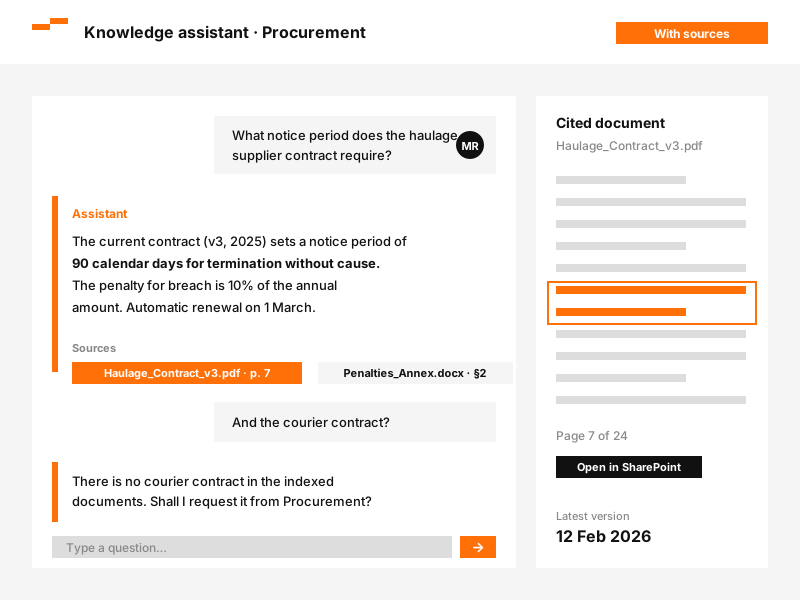
An assistant that reads the whole tender pack and returns, citing the page, the valuation deadlines, the penalties, the material requirements and the unusual clauses. What is an afternoon's reading today becomes a list you can check.

Value

Can I close the valuation without losing the week to it?

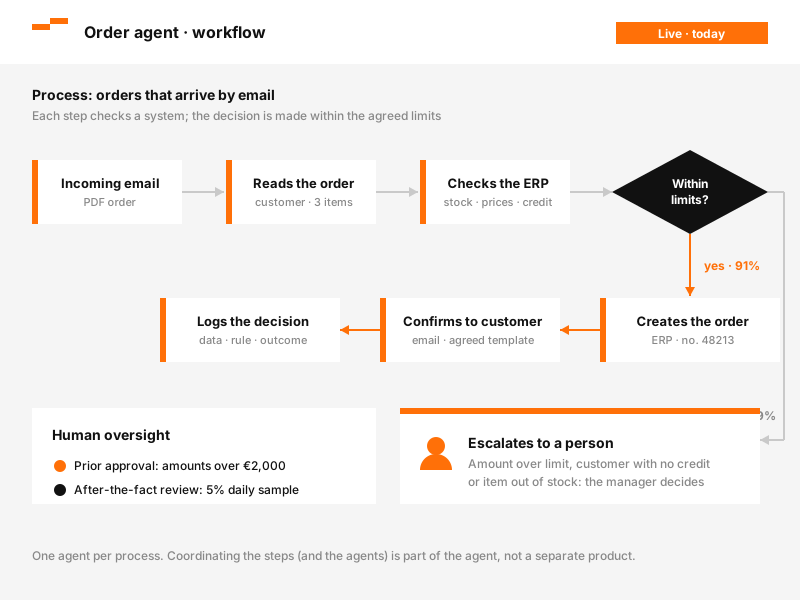
Gathering the measurements, daily reports and delivery notes from each site in one place and leaving the draft valuation ready. The person reviews and signs instead of collecting.

Control

How is the cost of this project going right now?

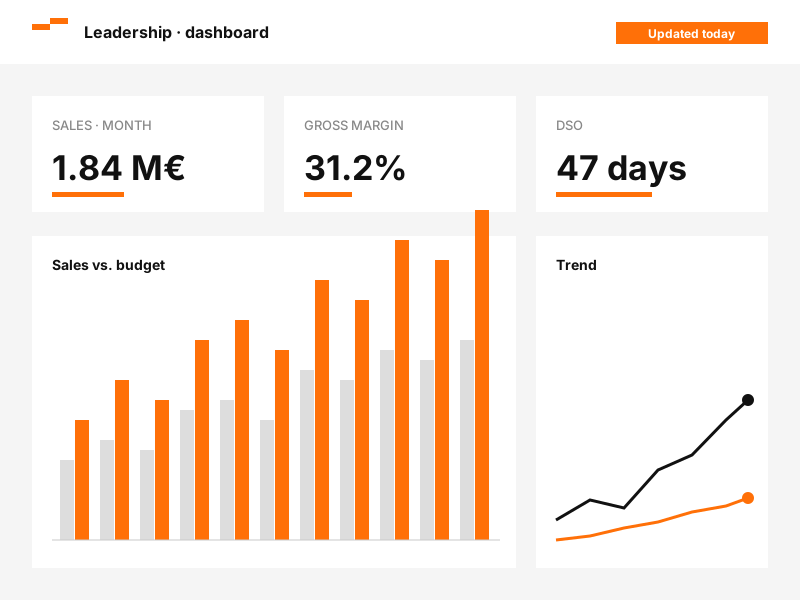
Actual cost against the construction budget, by cost heading and by project, with this week's data rather than the close. This is the dashboard, and it comes after the two points above because it needs the data to arrive on time.

What the first project would look like

Four steps, and the first is not technological. First you define the business problem; the technology comes after.

  1. 1

    Choose one project and one document

    In the short term, steer clear of ‘putting AI into the company’: one live project and its tender pack. A small, real scope that can be measured, and where you know how much time it takes today.

  2. 2

    See what state the documents are in

    Whether the tenders and minutes are searchable PDFs, scans or paper; whether there is a folder structure or each site manager keeps their own. This decides the rest of the project and is the first thing to resolve.

  3. 3

    Build the search over those documents

    You should be able to ask in plain language and get an answer that cites the document and the page. Without the citation it is no use: on site, an answer that cannot be checked does not get used.

  4. 4

    Only then, the numbers

    With data arriving on time, cost control by heading and overrun by project have something to feed on. Before that, a dashboard is an expensive ornament.

Where to start in construction

Documents first, dashboards afterwards. It is the reverse of almost any data project, and here it is the order that works.

First: tenders, contracts and minutes

Long documents turned into something you can question, with answers that cite the page. It is the entry point for almost every construction project we have done.

AI knowledge base

Next: the back and forth with the site

Daily reports, measurements and variations that arrive by email and are retyped by hand. Each one has to be interpreted before it is passed on, and that is what an agent does and a macro does not.

AI agents

Then: overruns by project and by heading

Overruns by cost heading and by project halfway through, when there is still room to negotiate. It works once the two previous steps have got the data arriving on time.

Business Intelligence

If needed: joining up ERP, site and accounts

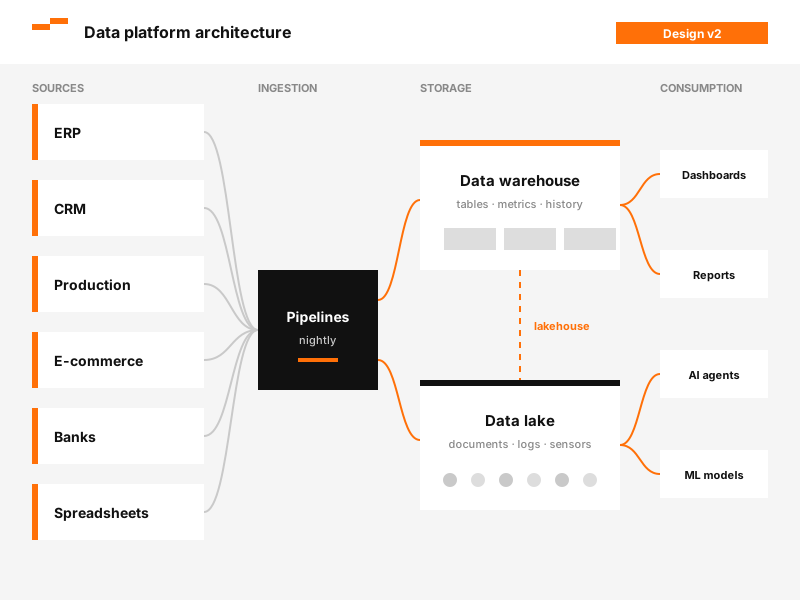
When site data, purchasing data and accounting data do not talk to each other, everything above stays half done. At that point the priority stops being AI and becomes connecting them.

Data platforms

What we build for construction companies

All seven, in the order they usually reach a construction company. The first four are the way in; the last three come once the earlier ones are working.

Frequently asked questions

Let's talk about your project
Does this work for a construction company, or also for an engineering firm?

For both, and for refurbishment and building services contractors too. AI in engineering starts in much the same place, because the underlying problem is the same: long documents that decide the margin, and a back and forth with the site that is done by hand. What changes is the volume, and how many subcontractors have to be reconciled.

We don't have BIM or anything like it. Can we still do something?

Yes, and that is the most common situation. None of the projects on this page needs BIM. They need the tenders, contracts, minutes and daily reports that every company in the industry already has. BIM is a different project, and a considerably more expensive one.

Tender documents are formal documents. Can we trust what it answers?

Only if it answers with citations. We build these searches so that every answer comes with the document and the page it is taken from. Whoever uses it can check it in ten seconds. On site, an answer that cannot be verified does not get used, and rightly so.

Our minutes are scanned, and some are on paper. Will that work?

Legible scans work as they are. Paper has to be digitised, and that is decided by volume. For the minutes of live projects it is almost always worth it; for a twenty-year archive, almost never. That check is the second step of the project and happens before anything is committed.

What if what we want is to control cost, not to read documents?

You can start there, and sometimes it is the right call. If your site data already reaches the system on time, cost control by heading is a straightforward project. We do not recommend building the dashboard when the data arrives two weeks late, because then the problem is not the dashboard.

How many of our people need to be involved?

Fewer than you fear and more than none. You need someone who knows the process, usually site management or the technical office, for a few hours a week during the first phase. We do not have that knowledge. We handle the whole technical side.

Half the work is done by subcontractors. Do their documents come in?

The ones you receive and keep do: contracts, valuations, daily reports and minutes that reach you from each subcontractor. It is where it shows most, because reconciling the monthly valuation is precisely a matter of pulling together material from several companies in different formats. What does not come in is the subcontractor's internal system, which you neither have nor need.