

The proposal is written from scratch every time
Method, team, references, scope and terms repeat from one bid to the next. They get rewritten because finding the good proposal, the one that won, takes longer than writing it again.

Professional
services.
Professional services
A professional firm is not short of information: it has the same information written many times over. Reports, opinions, proposals and submissions repeat what was already said, because finding it takes longer than writing it again.
A consultancy, an advisory firm or a technical practice spends years producing documents, and each one holds judgement: how that matter was resolved, which method was applied, what terms were agreed, why the other option was ruled out. That archive is the firm's real asset and it is almost never consulted, because searching it is slower than asking the colleague who was there. This is where AI-based document management changes the working day most: it doesn't tidy the folders better, it answers with the paragraph and the document it comes from.
The second front is the numbers, and in this sector it has its own shape. What you sell is hours, so margin depends on one thing: how many hours each type of engagement really takes against how many are billed. That figure exists in the timesheet and in the invoice, but the two live apart and are rarely matched by type of work or by client. Without that match, a firm knows it makes money and doesn't know what it makes it on.
The third is admin. Invoicing, reconciling, chasing payment and assembling the paperwork each client asks for ends up being done by whoever bills their hours at the firm's highest rate.
All three come from the archive the firm already has: its reports, its proposals and its timesheets.
An assistant over your own reports, opinions and client files that answers citing the document and the date. The firm's accumulated judgement stops depending on who is in that morning.
It finds the sections that repeat across earlier proposals (method, team, references, terms) and returns them with their source for you to review. The blank page stops being where every bid begins.
Real hours against billed hours, by type of engagement and by client, while the work is under way and not once it closes. It is the number that decides what you stop accepting and what you put up in price.
Four steps, and the third belongs to this sector: here the archive holds material from clients who compete with each other.
Proposals, or the reports of one service line, or the files of one type of engagement. A scope where you know how many there are, where they are and how much time goes into finding them today.
Whether it is filed by client or by year, whether each partner keeps their own, whether the key documents are complete and whether some versions contradict each other. This step decides the rest of the project.
A firm holds material from clients who compete, and sometimes from both sides of the same matter. An assistant that mixes up two files is not a technical error: it is a problem with the client. Permissions are written first, not afterwards.
With the document work running, matching real hours against billed hours is the second project. Less eye-catching, and the one that changes which engagements you take on next year.
Everything we build, in the order it usually reaches a consultancy or an advisory firm. The first is not up for discussion; the rest depend on how much the admin hurts.
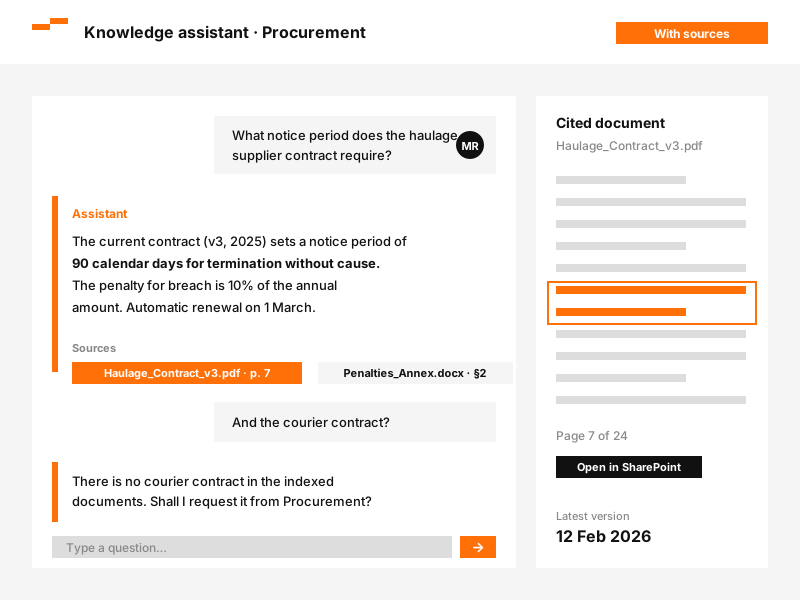
Your archive turned into something you can ask, answering with document and date, and with client-by-client permissions decided before indexing. It is the first project in this sector, without exception.
See the product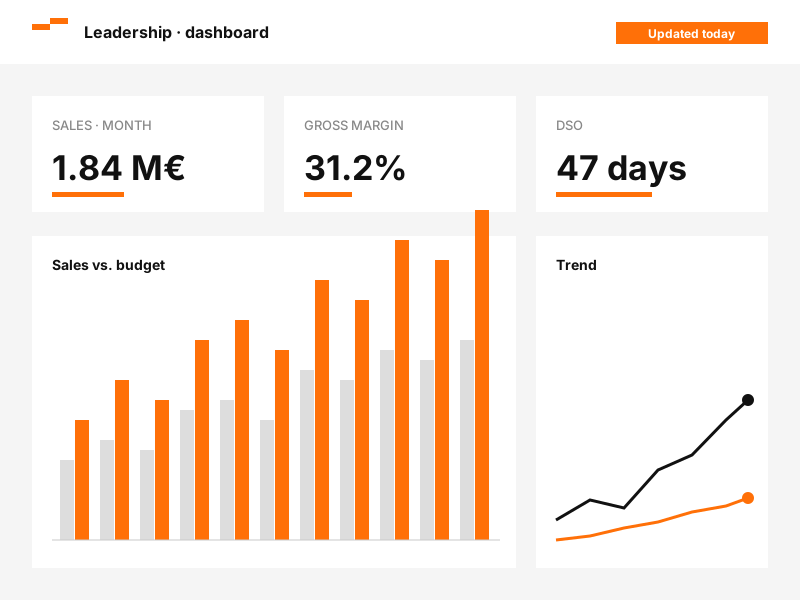
Real hours against billed hours, by type of engagement, by client and by person, while the work is under way. In a business that sells hours, that is the whole dashboard.
See the product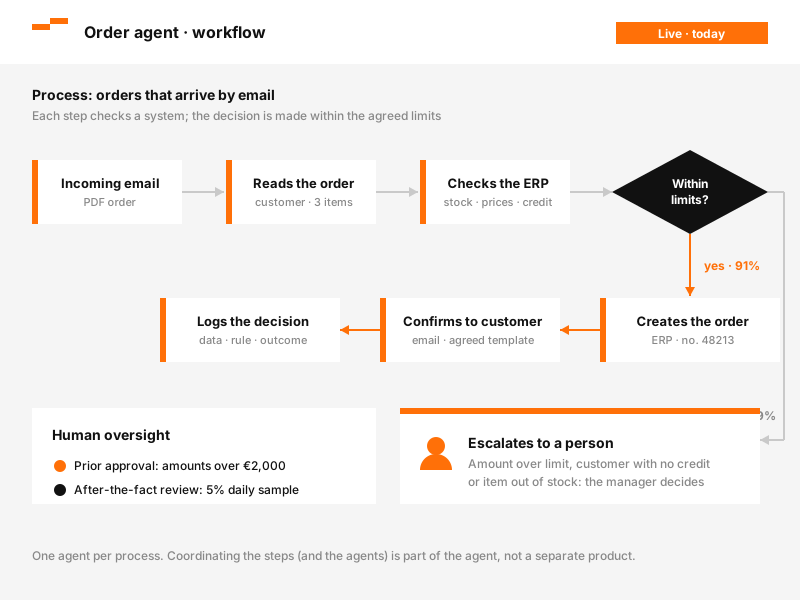
Invoicing, reconciliation, payment chasing and the recurring paperwork each client asks for every month, handled end to end with a person confirming.
See the product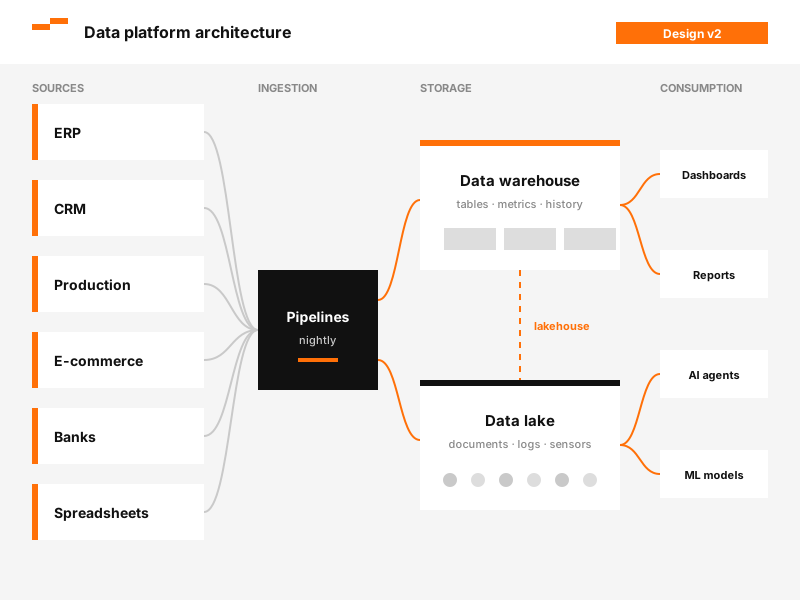
Document system, invoicing and timesheets connected. You need it when each one gives a different answer to how much an engagement cost.
See the product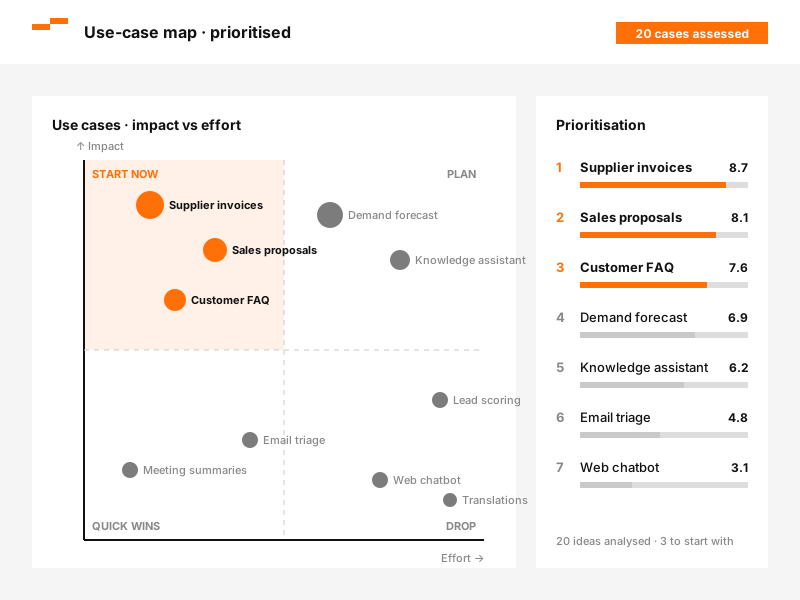
The session where you decide which type of document to start with and which number to move. It matters most when there are several service lines and each one works its own way.
See the product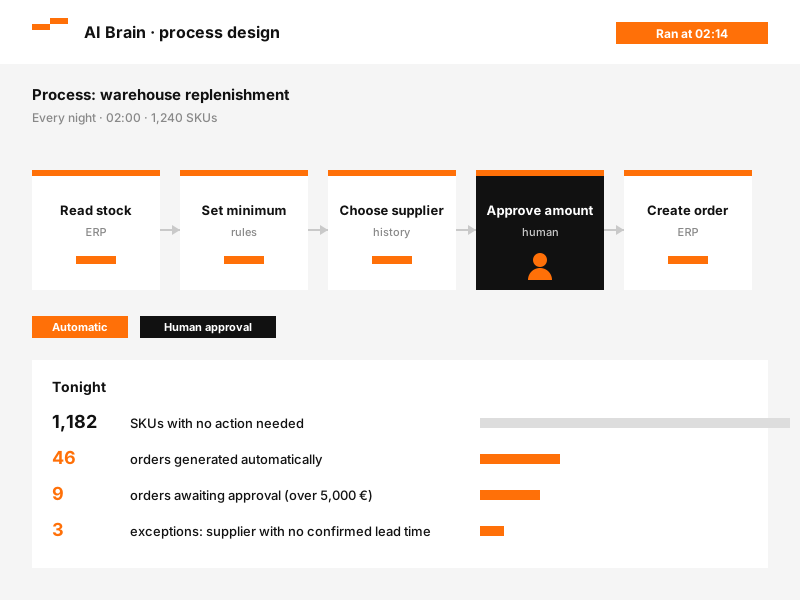
The full cycle of a recurring engagement: receiving the client's documents, checking them, preparing the deliverable and leaving the invoicing ready, with exceptions going up to a person.
See the product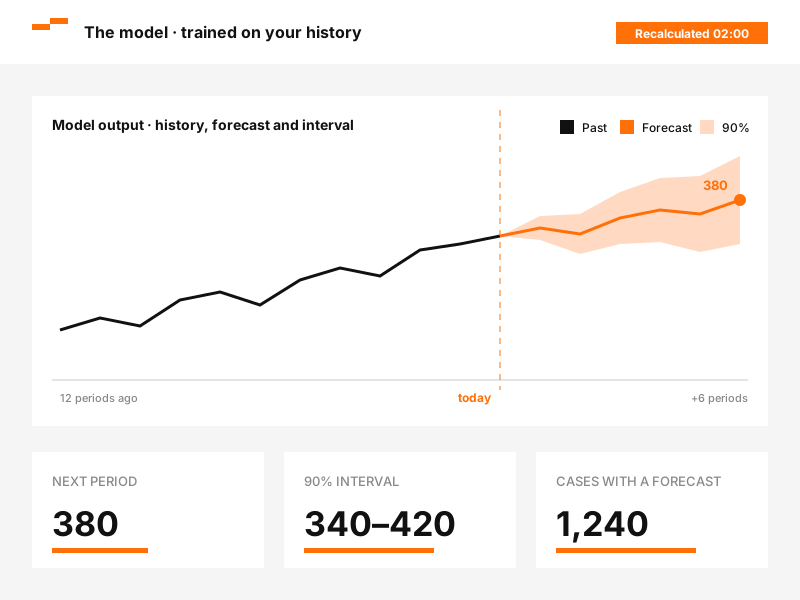
Estimating the hours an engagement will take from how closely it resembles earlier ones, and anticipating which clients will pay late. It needs several years of closed engagements with their real hours.
See the productFor both, and for law firms, technical practices and studios too. The document changes; the problem doesn't. In a consultancy the archive is reports and proposals; in a tax practice, client files, requests from the tax authority and rules that change every year. In every case the work is finding what is already written before writing it again.
In this sector it is the question that decides the project, which is why it is a step of its own and not a technical detail. Permissions are decided before anything is indexed: which files go in, who can ask about which, and what is logged for each query. An assistant that mixes files from opposing parties is not a system fault: it is a problem with the client and with your professional body.
It depends on how many documents there are, not how many people. A small practice with fifteen years of client files has the same archive problem as a large one, and fewer hands to solve it. What does change with size is the second project: matching hours against invoicing pays off sooner when there are several service lines.
It is work we do, even though it isn't AI. The obligation adds volume in documents and checks, and the one who usually absorbs it is the adviser, on behalf of its clients. What can be automated is the repetitive part: receiving, checking that each document complies, flagging what is missing and keeping the record. Replacing your invoicing software is not something we do, and whoever does it should tell you just as plainly.
No, and it is worth saying plainly because in this sector it is the underlying objection. An assistant finds what you have already written and returns it with its source for you to review. It doesn't sign an opinion, decide a strategy or take on liability. What it does is make sure judgement is applied on the basis of everything the firm knows, not just what one person remembers.