Yachting

and marine.

AI in yachting, for shipyards, marinas and yacht clubs.

Every refit is a different project, berths are managed by hand, and the record of past work is written down but nobody consults it.

A sector where the value of skilled manual work sinks under paperwork and admin.

Yachting and marine

What AI changes in yachting

In yachting the problem is rarely a lack of data: it is that every job is planned as if it were the first. What AI brings here is memory, so that what happened on earlier jobs is to hand when you are quoting the next one.

A shipyard builds up years of job sheets, quotes, supplier delivery notes and photos of past work. All of it exists, and almost none of it is opened when a boat comes in that looks like one repaired three seasons ago. The quote is estimated from memory again, the overrun shows up halfway through the haul-out, and the real margin on the job is only known once the boat has been handed back.

Marinas and yacht clubs, the other side of this corner of the blue economy, repeat the pattern somewhere else. Berth occupancy, waiting lists and services are kept in spreadsheets that only their author understands. The data is there; what is missing is for it to do some work.

4months of supplier lead time you have to plan ahead for
3systems that usually need joining up: workshop, stores and invoicing
5-8 ha week currently go on building quotes by copying old ones


Where it gets stuck today

Four things we have been told in shipyards, marinas and yacht clubs, in almost the same words.

The refit is quoted from memory

Every refit is different, but none is new: it resembles others that have already been done. The job sheets, quotes and real hours for that work are archived, and nobody opens them when quoting. So the figure is worked out in someone's head, with the boat still in the water.

Berths live in a spreadsheet

Occupancy, contracts, waiting lists and services spread across several files that one person maintains. When that person is on holiday, the marina runs on memory.

The parts store is restocked too late

Some spares have a four-month supplier lead time. If the minimum for the parts store is set by eye, either the boat waits for the part or the store fills up with stock that doesn't move for two seasons.

The history is no use to anyone

Photos of past work, haul-out reports, emails with the owner, technical specifications. Years of know-how stored in folders nobody goes through, because searching takes longer than asking the old hand in the workshop.

Three things you can automate now

You don't need a three-year plan. A shipyard or a marina already holds the material for all three.

Quote

What did a job like this really cost?

An assistant that searches past years' job sheets and quotes for jobs similar to the one being priced. It returns the real hours, the materials and the overrun on each, and the quote stops coming out of one person's memory.

Restock

What do I need to order today so we don't stop in August?

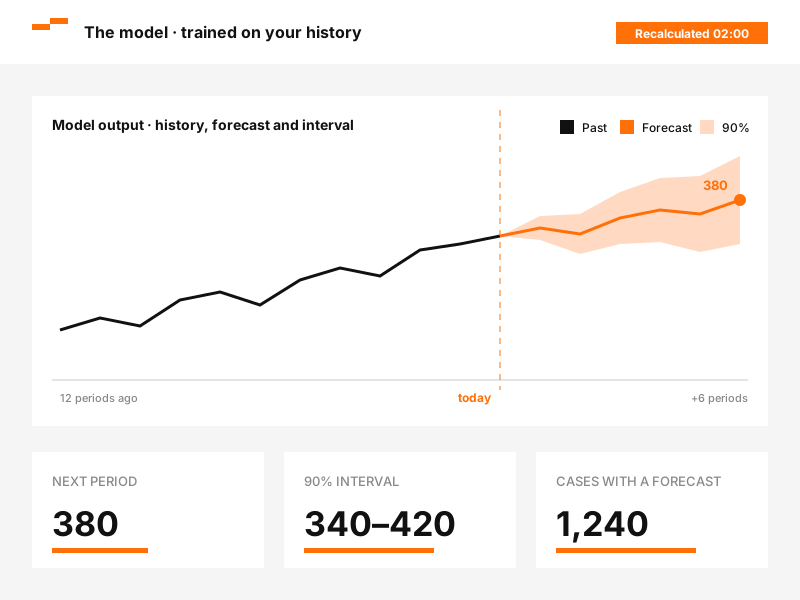
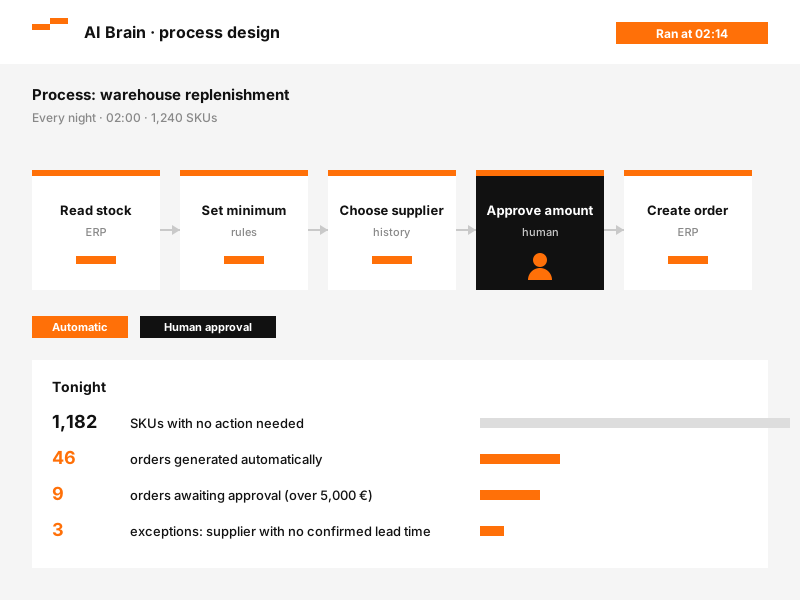
Minimum and ideal levels per part that account for each supplier's real lead time and the shape of the season. It is the project that has most often been our way into a shipyard.

Look up

What was done to this boat last time?

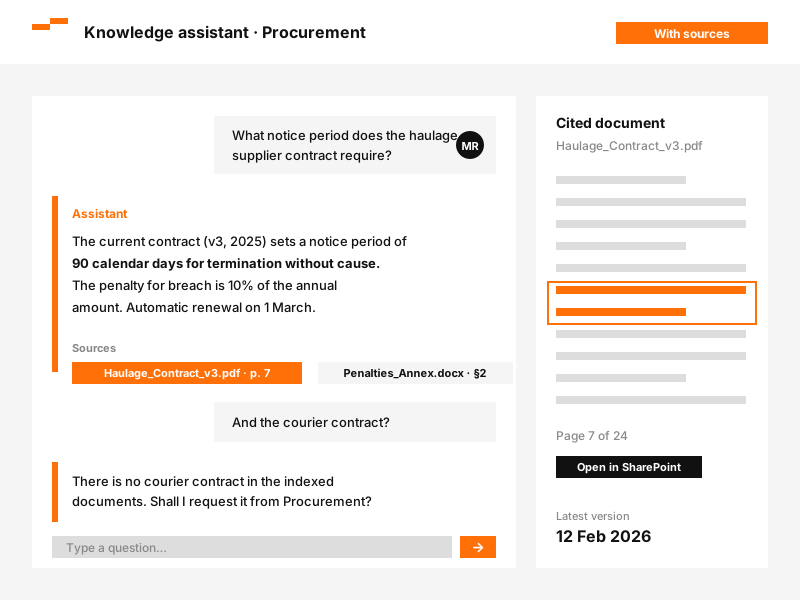
The history of past work, reports and specifications turned into something you can ask in plain language, with the source document cited in the answer. Know-how stops depending on who happens to be in the workshop that day.

What a first project looks like

Four steps, and one of them isn't technical: here the project competes with the season for the same people.

  1. 1

    Pick a type of job that repeats

    Not "refits", but a job that comes in several times a year: a haul-out with antifouling, or an engine service. A scope with enough past jobs to compare against.

  2. 2

    See what was written down about those jobs

    Whether the job sheets are on paper, whether the photos live on the yard manager's phone, and whether supplier delivery notes can be matched to the job they went to. This step decides the rest.

  3. 3

    Fit it into the season's calendar

    In high season nobody can stop to explain how a refit is quoted, and the person who knows is exactly the one who can't stop. Their hours are booked with the season's calendar in hand.

  4. 4

    Then, a history you can question

    With the margin per job in order, the archive of job sheets, quotes and photos can be asked in plain language. It stops depending on whoever has been longest in the workshop.

Where to start in yachting

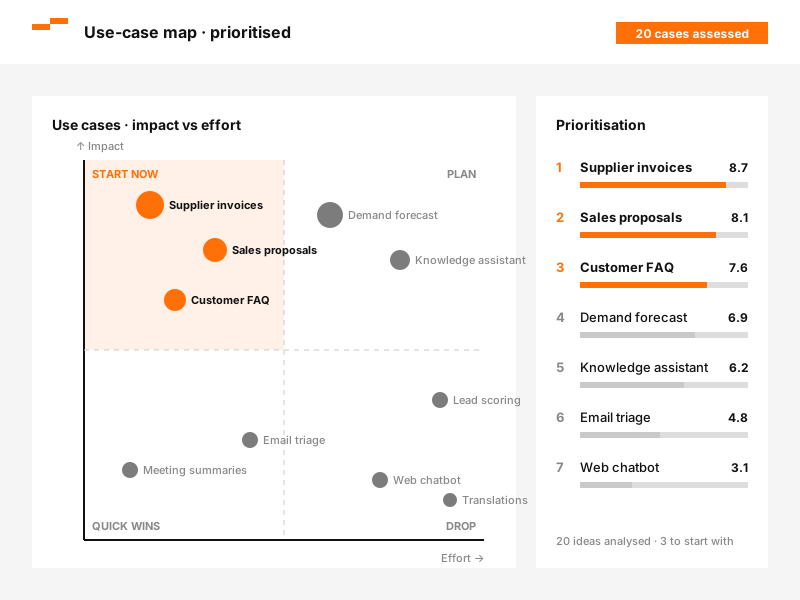
Here you start with what is already written down: making the history and the stores stop depending on one person's memory.

First: provisioning and margin per job

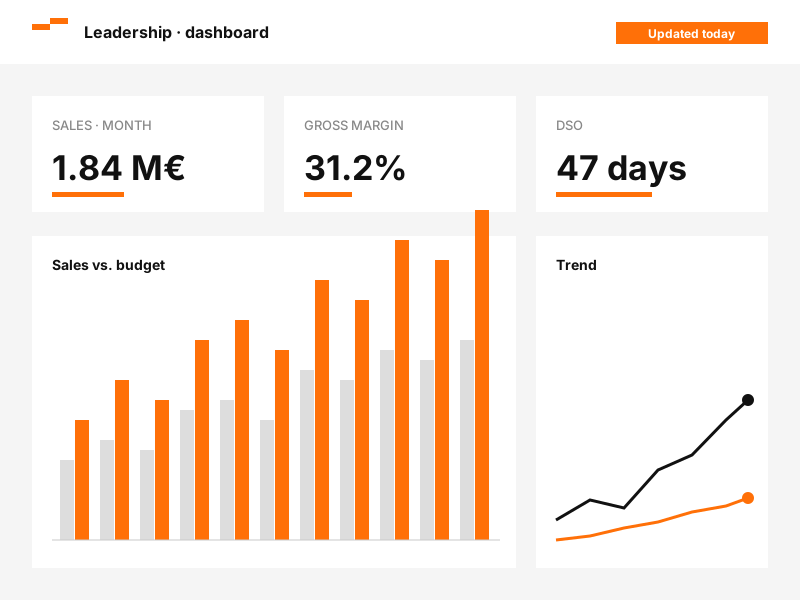
Calculate minimum and ideal stock with each supplier's real lead time, and know the margin on each haul-out while it can still be corrected. It is where we start almost every time.

Business Intelligence

Next: the history, searchable

Job sheets, haul-out reports and technical specifications turned into something you can ask, with answers that cite the document.

AI knowledge base

Then: the processes done by hand

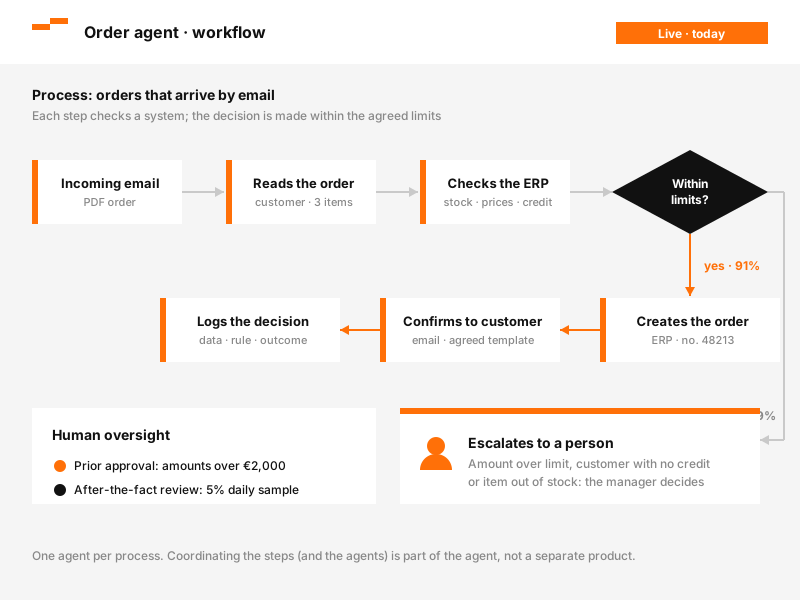
Quotes built by copying another quote, berth contracts, services added and cancelled. It repeats every week and still needs a decision each time: that is the kind of task where an agent pays for itself.

AI agents

When needed: joining up workshop, stores and invoicing

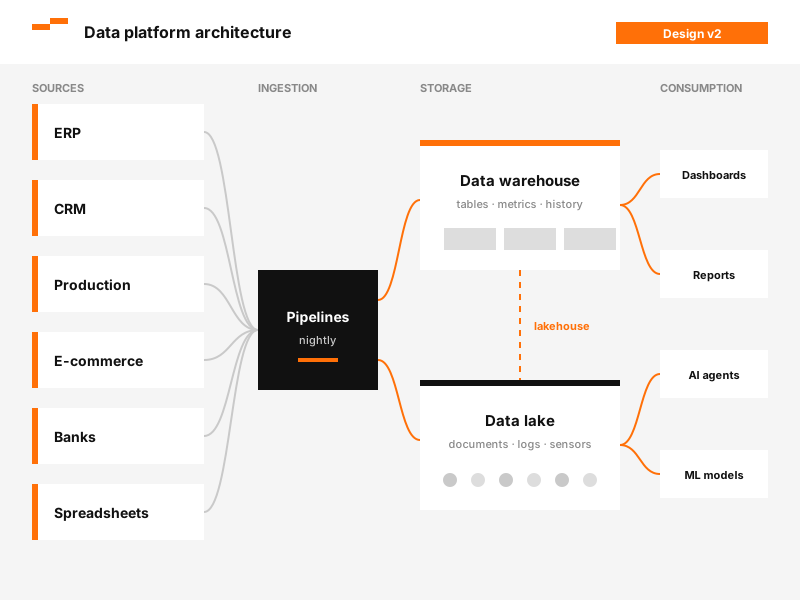
If the three systems don't talk to each other, everything above is only half done. When that happens, connecting them is the project, not the preamble.

Data platforms

What we build for a shipyard or a marina

Everything we build, in the order it comes into yachting. You start with what is already written and filed, which here is almost everything.

Frequently asked questions

Let's talk about your project
Which part of the blue economy do you work with: shipyards, marinas or both?

Both, as well as yacht clubs, refit services and suppliers to the sector. They are different businesses and the entry point changes. In a shipyard the first project is usually in quoting and the stores. In a marina or a club, it is in berth management and in member and customer information.

We are a small shipyard. Is this for us?

We work with companies of 20 to 500 people, and many of our yachting clients sit at the lower end of that range. Size doesn't decide it: what decides it is whether there is a process that repeats and costs money every week. Calculating parts-store minimums or rebuilding quotes by hand meets both conditions with twenty people or with two hundred.

What about the owner's data?

It is treated as what it is: sensitive information about a client who usually expects discretion as well. The architecture phase decides where each piece of data lives, what leaves the system and who can see what. All of that comes before choosing a model. When data must not leave, we work with privately hosted models.

Our history is on paper and in network folders. Is that any use?

More than it seems. Scanned haul-out reports, job sheets and specifications in PDF are exactly what a knowledge assistant works from. First you have to look at the volume and the condition: whether the scans are legible, whether there is a minimal folder structure and whether the important documents are complete.

How long before the first result shows?

It depends on the process and the state of the data, not on the sector. What we do say upfront is which number has to move, and that is agreed before we start: in provisioning it is usually the stock-out rate. Giving a date before opening your job sheets and purchase history would be guessing: in a shipyard, much of the timeline is set by the state of the haul-out files.

Doesn't seasonality complicate everything?

It does, and it is also the reason the work pays off here. In a seasonal business, a provisioning mistake can't be put right in August: you pay for all of it. That is why the minimum-stock calculation has to build in each supplier's real lead time and the curve of the season, not an annual average.

A lot of the work is done by outside contractors. Is that part of the project?

Whatever passes through your hands is: the quote you ask them for, the invoice they send you and the hours you charge to the haul-out. That is half the cost of a refit and the part least under control, because it arrives on paper and in different formats. What we don't do is get into the contractor's own system: we work with what they hand you.